Get Full Government Meeting Transcripts, Videos, & Alerts Forever!
Get email alerts on the Maternal Health Costs topic
No spam. Unsubscribe anytime.
Utah House approves measure letting mothers seek half of pregnancy‑related medical costs from biological fathers
Summary
The House passed the third‑substitute of HB113 after extended debate about enforcement through the Office of Recovery Services and potential unintended incentives; sponsor Rep. Brammer framed it as increasing paternal responsibility while opponents warned it could create coercive financial pressures on pregnant women.
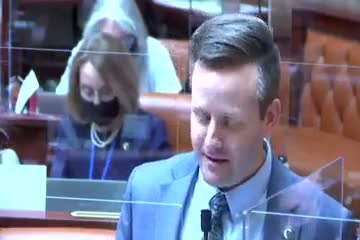
Representative Brad R. Brammer, sponsor of House Bill 113, told the House that the third substitute of his measure "seeks to be pro life without being anti‑abortion" and aims to make fathers more accountable for pregnancy‑related medical costs by allowing mothers to seek collection after birth through the Office of Recovery Services (ORS).
Supporters said the change clarifies and streamlines an existing civil remedy and will help defray medical expenses that fall on mothers. "These shared costs…are a small step" toward parental stewardship, Brammer said, noting ORS collection mechanisms and citing similar variations in other states.
Opponents and questioners raised enforcement and policy concerns during an extended exchange. One member warned that creating a statutory obligation for fathers to pay half of pregnancy costs could produce perverse incentives, saying such a financial obligation might lead some men to "pressure a woman into having an abortion" or to steer clinical decisions toward less costly care. Other lawmakers questioned practical collection rates and whether nonpayment would eventually trigger criminal referral. Representative Brammer responded that ORS would be the primary collection mechanism and that similar provisions exist elsewhere; he said documentation would be submitted to ORS and that collections could be integrated with child‑support processes.
Members also debated whether the bill would reduce women’s autonomy. The sponsor said a mother need not notify a father and that claims could be made after birth, while supporters described the measure as more specific than current law and a means of increasing accountability.
In floor action, the House adopted the third substitute and passed HB113 by recorded vote: 57 yeas, 13 nays. The bill will be transmitted to the Senate for further consideration.
The measure’s next steps are Senate consideration; the House debate left open several implementation details related to ORS collection practice and the statute’s effect on pre‑birth decision‑making.