Get Full Government Meeting Transcripts, Videos, & Alerts Forever!
Get email alerts on the Budget topic
No spam. Unsubscribe anytime.
House passes $29 billion appropriations package after floor debate; sponsor highlights tax cuts, debt prepayment and program investments
Summary
Senate Bill 3, the session's appropriations capstone, was debated and passed by the House. Sponsor Representative Val Peterson described $29 billion in all-sources funding for 2024, $1.8 billion in additional allocations, $775 million in debt prepayment, teacher pay increases and an $850 million tax cut. The bill passed 70-1.
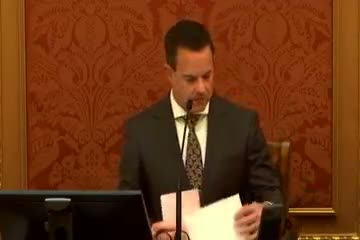
Representative Val Peterson presented Senate Bill 3 as the chamber's capstone appropriations measure, describing it as "the bill of bills" that ties prior fiscal legislation together and balances the state budget. "It also adds an additional $1,800,000,000 since our previous action. It also brings our 2024 state budget from all sources to $29,000,000,000," Peterson said on the floor. He cited major priorities funded in the package: teacher pay increases (a cited $6,000 raise), a 6% increase in the WPU, a $775 million debt prepayment, nearly a quarter-billion for housing and homelessness, half a billion for water projects, and more than $1.5 billion for transportation investments. Peterson characterized the package as providing the largest tax cut in the state's history ($850 million).
Members offered both gratitude and praise and asked questions about federal funding shares and fiscal stewardship. Representative Cotter and others spoke to constituent concerns and the budget's priorities; Representative Clancy praised bipartisan work and the emphasis on affordability and sustainability. Representative Stratton noted stewardship themes including water and land management.
After discussion and summation, the House opened voting. Senate Bill 3 passed the House with 70 yes votes and 1 no vote. The bill will be signed by the Speaker and returned to the Senate for the President's signature as the next procedural step.
The presentation and vote close a central chapter in the annual appropriations process; sponsors said work will continue at the implementation level, including oversight by the legislative fiscal analysts and agencies responsible for allocated funds.