Get Full Government Meeting Transcripts, Videos, & Alerts Forever!
Get email alerts on the Transportation Road Diet topic
No spam. Unsubscribe anytime.
Highland Park discusses DOT’s Upper Raritan road-diet; DOT seeks council endorsement for center turn lane
Summary
Council members and residents debated DOT stripe-based alternatives for Upper Raritan/Route 27, weighing a DOT-preferred center two-way left-turn lane (narrower bike lanes) against wider bike lanes. DOT officials told the borough they could expedite a 70% striping implementation by next summer if the council provides a resolution of support.
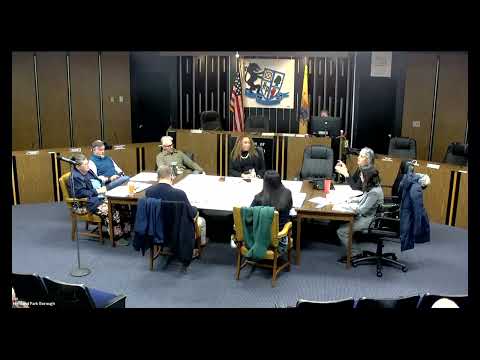
Council members spent the bulk of their meeting reviewing New Jersey Department of Transportation (DOT) stripe-based alternatives for the Upper Raritan (Route 27) corridor and whether to endorse an expedited striping plan.
Terry, a council member leading the presentation, told the borough that DOT presented two main striping options: one with wider bike lanes (a 6-foot bike lane with a 4-foot buffer on each side) and a second that adds a 12-foot center two‑way left-turn lane while narrowing bike lanes to about 5 feet. “They prefer the center lane option,” Terry said, describing that choice as DOT’s engineering team’s current recommendation.
Terry and staff described a two-track timeline: DOT officials characterized short-term “quick fixes” (higher-visibility crosswalks at Eleventh and Raritan, improved school-crossing signage and leading-pedestrian intervals) already placed into a maintenance work queue, and a faster striping deployment that DOT said could be painted as part of a 70% implementation by the end of next summer. Full reconstruction — curbing, driveway and sidewalk work and drainage — would remain on a multi‑year schedule and requires about 14 right‑of‑entry agreements with property owners.
Several council members pressed DOT’s trade-offs between cyclist comfort and motor-vehicle flow. Members asked whether the DOT would run a new public information period for the center-turn option; Terry said the current proposal reflected a combination of prior public comments, the borough’s requests, and DOT direction. Councilmembers also debated whether the borough should ask DOT to lower the area’s posted speed limit; DOT was invited back for clarification on speed‑setting and signage.
Public commenters urged caution. One resident, speaking of a child killed on Route 27 years earlier, framed the project as urgent for pedestrian safety. Jack Waller, a resident who said he had worked professionally on similar roadway designs, recommended the council review the cons of a two‑way left‑turn lane and urged “take a step back” and vet all alternatives before endorsing one. From Zoom, Peter Bilton, co‑chair of the Safe Walking and Cycling committee (SWAC), said the committee was split and recommended the council seek additional DOT clarification on speed limits and striping details before issuing a resolution of support.
Council discussion ended with consensus that the borough should press DOT for clarification on speed limits, visual cues at side streets, and how short‑term measures relate to longer sidewalk and drainage work. Several council members expressed support for moving forward to secure the faster, 70% striping work while reserving further design conversation about physical separations such as bollards or raised bike lanes for future phases. Terry said she would draft a resolution expressing conditional support for the center‑lane, expedited option together with the council’s list of safety concerns for DOT to consider.
No formal vote was taken at the meeting; the council asked staff to draft language and to continue discussions with DOT before issuing a formal resolution.