Get Full Government Meeting Transcripts, Videos, & Alerts Forever!
Get email alerts on the Open Public Meetings topic
No spam. Unsubscribe anytime.
Utah House Passes HB 36 to Clarify 'Evasive Action' Under Open and Public Meetings Act
Summary
Second‑substitute HB 36 passed the House 49–22. Sponsor Representative Dunnigan said the bill clarifies the definition of a public meeting and adds an 'evasive action' prohibition—including some electronic coordination—after a Southern Utah county audit prompted legislative review.
The Utah House on Feb. 5 approved second‑substitute House Bill 36 to tighten the state's Open and Public Meetings Act by defining when a gathering becomes a public meeting and by prohibiting deliberate attempts to evade meeting requirements.
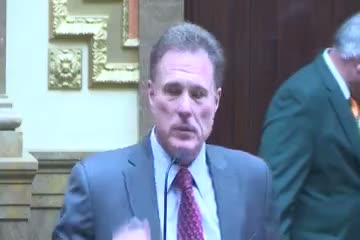
Representative James A. Dunnigan, sponsor of HB 36, said the measure responds to an audit of a Southern Utah county where two commissioners allegedly coordinated strategy outside public view, hired outside counsel and then approved a prearranged outcome in a public meeting. "We created a working group in the political subdivisions committee over the interim, and this is the work product," Dunnigan said as he described updated statutory language.
HB 36 narrows and clarifies the definition of a "meeting" to mean a convened gathering of a public body with a quorum called for express purposes such as receiving public comment or taking action. The bill adds a definition of "evasive action" to prohibit deliberately avoiding convened meetings in order to avoid the Act’s requirements and bars a public body from engaging in substantive action outside a meeting by "taking evasive action."
Floor members probed whether routine electronic communications would violate the bill. Representative Jason Brammer asked if a text message asking another commissioner whether they would vote "yes or no" before a public meeting would be an evasive action; Dunnigan said the determination can be case specific but that the bill is intended to catch communications that effectively predetermine votes or involve substantive strategy. "If they're deciding how they're going to do it, that needs to be done in the public meeting," Dunnigan said.
Some members, including Brammer, said the bill still leaves uncertainty for three‑member commissions that exercise both executive and legislative roles and worried officials could be left uncertain about routine administrative communications. Supporters said the bill substantially improves a vague, circular current statute and was crafted with stakeholder input.
Voting closed and second‑substitute HB 36 passed the House 49–22. The bill will be transmitted to the Senate for consideration. Floor debate centered on balancing transparency with practical communication needs for local officials and clarifying the scope of prohibited "evasive" conduct.
Votes at a glance: second‑substitute HB 36 — passed 49 yes, 22 no; sent to the Senate for further action.