Get Full Government Meeting Transcripts, Videos, & Alerts Forever!
Get email alerts on the Outfall Project topic
No spam. Unsubscribe anytime.
Falmouth outlines outfall design, monitoring and permit path; USGS says aquifer impact unlikely
Summary
Wastewater superintendent Amy Woll described expanded eelgrass and benthic surveys, a two‑year baseline water‑quality program and marine soil borings for a proposed 2,000,000 gpd outfall; preliminary USGS modeling suggested no significant impact to the town’s drinking‑water aquifer, with the USGS report due July 2025.
Amy Woll, Falmouth’s wastewater superintendent, updated the Water Quality Management Committee on the town’s planned wastewater outfall and related baseline monitoring and permitting.
Woll said the town has stood up a regulatory review team and expanded its eelgrass and benthic survey area to provide regulators a broad before‑after gradient. The town began a two‑year baseline monitoring program in Nantucket Sound, collecting dissolved oxygen, temperature, salinity, pH, water clarity twice monthly and a suite of nutrient and biological indicators monthly at three near‑to‑offshore locations. The town expects to complete the baseline next summer and use the data in MEPA filings.
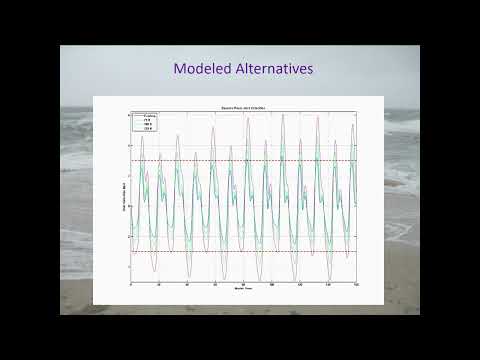
Woll told the committee the USGS completed the requested aquifer modeling for a proposed outfall discharge of 2,000,000 gallons per day. While the formal USGS report was not yet released, preliminary review with the Water Management Act staff indicated the change in aquifer head would be very small and was judged “not a significant impact to the town’s drinking water supply,” she said; the full USGS report is expected in July 2025.
On engineering preparatory work, Woll said the town has completed permit applications for marine borings to characterize offshore soils for directional drilling and outfall design: one onshore boring at Kite Park and six offshore borings (approximately 6‑inch diameter, ~100 feet deep), to be performed from a jack‑up barge this winter pending Army Corps of Engineers authorization.
Woll summarized the regulatory pathway: the town is developing an anti‑degradation evaluation for an NPDES permit, coordinating with DEP and EPA, and using monitoring plus dilution modeling (and tertiary treatment plant performance, estimated to remove ~94% of nutrients) to demonstrate the outfall would not increase nitrogen load to Nantucket Sound and would, through sewering, reduce nitrogen delivered from shore. She also noted narrative criteria (eelgrass and habitat) will be part of the review.
Woll presented a project schedule: submit the MEPA Environmental Notification Form in 2025 to start review, draft EIR by late 2025/early 2026, preliminary design in 2028 and a construction window identified by staff as 2029–2032 (town schedule). She said several permits remain (Army Corps, NPDES, state coastal authorizations) and that the town will post the monitoring and survey results on the committee website.
Committee members asked about sensitivity runs (larger discharges), receiving‑water designations (Nantucket vs. Vineyard Sound) and whether monitoring stations are appropriately sited; staff and consultants said modeling and monitoring were focused on the planned discharge area and regulators participated in the survey design. The committee asked that the USGS report be posted once released.