Get Full Government Meeting Transcripts, Videos, & Alerts Forever!
Get email alerts on the Weather And Climate topic
No spam. Unsubscribe anytime.
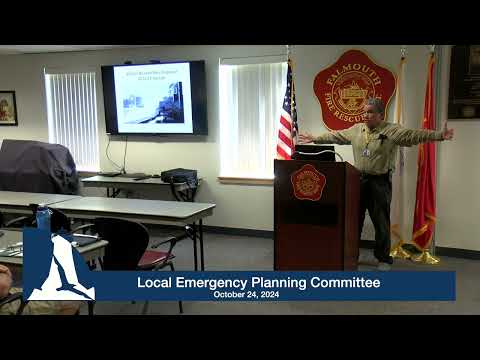
Falmouth LEPC meteorologist warns of more intense, less predictable storms and urges preparedness
Summary
Resident meteorologist Frank O'Loughlin told the Town of Falmouth LEPC that recent storms showed rapid intensification and that La Niña and climate-driven moisture increases raise the risk of sudden heavy rainfall and episodic severe winter storms; he urged residents and agencies to prepare.
Frank O'Loughlin, a resident meteorologist, told the Town of Falmouth Local Emergency Planning Committee that while this past tropical season spared much of New England, recent storms elsewhere showed rapid intensification and heavy rainfall patterns that increase local risk and underscore the need to prepare.
O'Loughlin reviewed recent tropical activity, naming storms such as Milton and Helene, and said some systems deepened explosively in short periods. "It only takes us one single storm to make a season," he said, arguing that a single intense event can produce most of a season's damage and human harm. He described how late-season storms can transition to broader, wetter systems that spread damaging winds and surge over hundreds of miles.
The meteorologist tied the winter outlook to ocean and atmospheric patterns. He said the region is moving toward a La Niña phase, which tends to produce a more variable jet stream. That pattern, he said, can produce generally warmer conditions but also short periods when the jet stream sharpens and allows several strong storms or one major event to hit in rapid succession. O'Loughlin noted National Oceanic and Atmospheric Administration (NOAA) outlooks have only modest confidence in seasonal forecasts and warned the committee to "be ready for extremes."
He also addressed flooding risks: warmer air can hold more moisture, increasing the potential for intense inland rainfall. Using recent events as examples, O'Loughlin warned that saturated soils followed by heavy precipitation can produce rapid, severe flooding even when a storm is no longer tropical in nature.
The presentation concluded with practical advice: secure outdoor items before storms, ensure portable generators are vented to prevent carbon monoxide, and review household emergency plans. O'Loughlin recommended that agencies and residents monitor official channels and local logs via the EOC and WebEOC for localized guidance.
The committee said it would continue to invite such briefings and share O'Loughlin's materials; members were reminded that a single large storm can change the seasonal impact assessment and that preparations should focus on mitigating both wind and flood risks.