Get Full Government Meeting Transcripts, Videos, & Alerts Forever!
Get email alerts on the Pervious Surfaces Bzone topic
No spam. Unsubscribe anytime.
Commission moves to require mitigation for pervious surfaces that don't support vegetation in B zone
Summary
Staff recommended, and commissioners agreed in principle, to add regulatory language requiring mitigation for pervious surfaces in buffer (B) zones that do not support natural vegetation (gravel patios, certain pavers, astroturf); staff will draft a redline insertion.
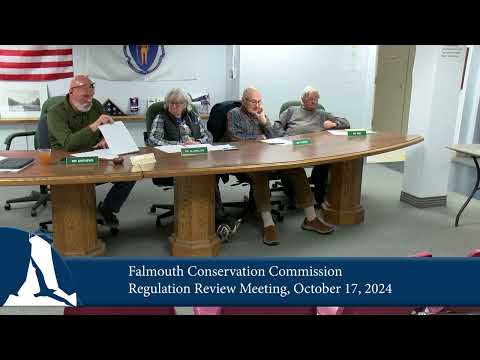
At its Oct. 17 workshop the Falmouth Conservation Commission discussed tightening rules for pervious surfaces in the town’s B (buffer) zone to prevent gradual loss of vegetated buffers.
"We're not gonna have any decisions tonight. It's a recommendation by the staff that we start requiring mitigation for pervious surfaces that do not support natural vegetation in a B zone," Speaker 3 said, describing instances where engineers treat some gravel or paver systems inconsistently when calculating mitigation credits. The staff proposal would amend existing language to say that any increase in impervious surface or pervious surface that does not support natural vegetation in a B zone will require mitigation and buffer plantings.
Commissioners and consultants noted that technologies marketed as pervious sometimes do not support the same vegetative function as true natural groundcover. One commissioner argued that lawns and fertilized turf can be a greater source of nutrient runoff than gravel, underscoring the need for precise regulatory language rather than relying on product labels.
Staff said it would insert the clarified language and circulate a redline for review; the commission encouraged members to examine recent plans with the proposed change in mind.
No formal vote was taken; the commission requested examples and a redlined change for the next regulation meeting.