Get Full Government Meeting Transcripts, Videos, & Alerts Forever!
Get email alerts on the Telehealth Policy topic
No spam. Unsubscribe anytime.
Board moves telehealth policy to second reader after debate over consent, privacy and equity
Summary
Talbot County’s proposed telehealth policy (Policy 10.28) was advanced to second reader; board members raised questions about consent language, HIPAA/privacy implementation, parent presence, device availability and multilingual access during a lengthy Q&A with staff.
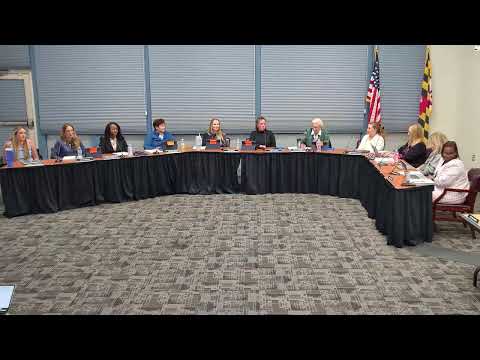
Talbot County Board of Education members advanced a new Policy 10.28 and its administrative regulation (access to telehealth platform services in secondary schools) to second reader after an extended discussion about implementation details.
Ms. Spurrier, who presented the policy, said the law (referenced in the meeting as Maryland House Bill requiring local policies by July 1) and state guidance drove the AR’s definitions and structure. She said the AR requires ‘‘a private space’’ and that ‘‘the parent is gonna have to be present with the student’’ in the building during telehealth visits, though the parent would not necessarily need to be in the same room for private appointments.
Board members pressed for clearer consent language in the policy itself (some said they saw consent in the AR but preferred it in the policy), asked how HIPAA protections and privacy of mental-health visits would be enforced, and queried whether the district would provide devices or translation services. Ms. Spurrier said the district would aim to provide spare devices when needed and that confidentiality agreements are between provider and patient; she said the state guidance did not prescribe HIPAA forms and that multilingual translation is primarily the responsibility of the care provider.
Concerns focused on equity and practical logistics: where private spaces would be found in space-constrained schools, whether staff would be burdened by managing appointments, and how emergency situations during a telehealth visit would be handled. Ms. Spurrier cautioned that the coming year would likely be ‘‘trial and error’’ and anticipated revisions after the policy’s initial implementation.
The board voted to move the policy to second reader and signaled it expects additional discussion and possible AR changes at future meetings.