Get Full Government Meeting Transcripts, Videos, & Alerts Forever!
Get email alerts on the Streets Tax topic
No spam. Unsubscribe anytime.
Commission approves $120 annual special maintenance fee after hours of public comment
Summary
After a lengthy public hearing, the City Commission approved Resolution 2024-08 to assess $120 per taxable parcel (effective for 2025 taxes payable in 2026) to fund street and related infrastructure; opponents raised legal and affordability concerns and pledged petitions to put the measure before voters.
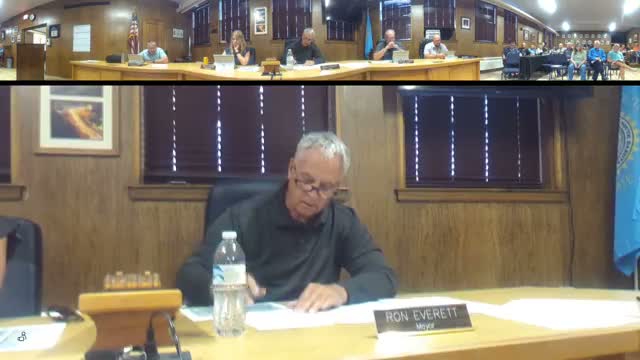
The City Commission voted to adopt Resolution 2024-08 on Sept. 16, 2024, establishing an annual special maintenance fee of $120 per taxable parcel to fund the repair and maintenance of public streets and supporting infrastructure, including curb, gutter, sidewalks and retaining walls. The resolution takes effect for 2025 taxes payable in 2026.
The measure drew an extended public hearing and debate. Residents raised legal and equity objections, citing SDCL 9-43-1.38 and arguing the fee should apply only to lots that directly abut municipal improvements. Attorney and resident Chad Brown said the statute limits the fee “to lots fronting and abutting any municipally maintained public improvements,” and asked the commission to narrow the scope. Several speakers, including Virginia (who identified herself from Mill Street) and Rose Burns, argued that many homeowners are on fixed incomes and that adding a $120 assessment would be burdensome. Rose Burns urged the commission to instead reallocate existing budget dollars and pointed to recent personnel increases as an example of choices the city could make.
City staff responded that the draft resolution was edited after review by the city attorney to reflect SDCL 9-43-1.38 and that parcels not abutting municipal improvements were removed from the assessment language. Staff said the fee is intended to be restricted to public infrastructure and that private property owners would not have work done on private walls or sidewalks with these funds. The staff presentation noted the fee is meant to supplement—not replace—the existing streets budget and would be added as a line item for street maintenance.
Supporters and some commissioners said the revenue would allow the city to resurface more pavement annually and address deferred maintenance more predictably. Staff estimated approximately 1,900 parcels would be included before removing parcels that do not abut city-maintained infrastructure; staff later cited a refined count of 1,927 parcels to be refined downward when final culling of non-abutting parcels is complete.
Opponents said the statutory language and the resolution’s wording still left ambiguity about permissible uses and whether city-owned walls or private walls could be repaired with the fee; a resident referenced a past public vote about funding for the Hanley Center and asked for clarity about ownership and past commitments. Staff and the city attorney said the final wording aligns with the statute and specifically ties spending to public streets and supporting infrastructure.
After public comment and discussion, the commission approved the resolution by roll call (3–2). Commissioners who voted against the measure expressed concerns about fairness and long-term increases; others said an annual review and the option for voters to petition would provide protections. Residents in the room said they would pursue a petition to place the measure on the ballot if they choose.
The commission directed staff to finalize the parcel list (excluding non-abutting parcels) and to publish the final resolution wording. The resolution states the fee will be certified to the Lawrence County Auditor and collected with municipal taxes. A petition process was discussed; staff explained that successful petitions require specific wording and a statutory number of valid signatures and that petitions may be submitted after publication of the resolution for potential special or scheduled elections.