Get Full Government Meeting Transcripts, Videos, & Alerts Forever!
Get email alerts on the Cannabis Policy topic
No spam. Unsubscribe anytime.
Seminole council debates allowing medical-marijuana consumption at public events; staff asked to research insurance and Muskogee ordinance
Summary
Residents and business owners urged the council to amend city ordinances to allow medical-marijuana consumption at certain outdoor events. Council raised insurance, TSET funding and liability concerns and directed staff to research cannabis-specific insurance, review Muskogee's ordinance and report back; no ordinance change was adopted.
Seminole 'city council members spent the bulk of a meeting debating whether to allow public medical-marijuana consumption during sanctioned outdoor events.
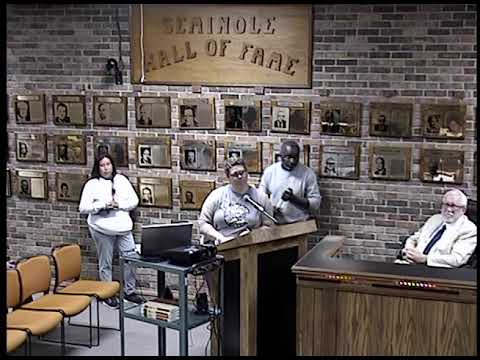
During the public-comment portion of the meeting, residents and business owners pressed the council to permit consumption at municipal events and parks. "We would like to support events like the most recent charity golf tournament that was not allowed to have medical marijuana consumption on-site," said Stephanie Davis, a resident who identified herself at the microphone and provided a packet of materials for council review. Others, including dispensary staff and event organizers, told the council that allowing consumption could attract visitors and generate permit and sales-tax revenue.
Council members and staff focused the discussion on three practical issues: insurance coverage and exclusions, the city's existing no-smoking commitments tied to TSET grant funding, and how other Oklahoma cities regulate similar events. City staff reported that the council's insurer (OMAG) was "still struggling" with cannabis coverage and may include a cannabis exclusion in standard city policies, and that cannabis-specific event insurance is available for organizers. Council members repeatedly said those event policies could be required as a condition of approval.
A council member summarized the direction taken: staff should investigate the Muskogee ordinance as a model, identify whether TSET funding or other grant agreements would be jeopardized by changing smoke-free rules, and check whether the city's liability insurance includes a cannabis exclusion. The council did not adopt any ordinance or vote to change existing smoking restrictions at the meeting.
What happens next: staff were asked to return with findings on (1) OMAG/TSET constraints and exposure, (2) sample language from Muskogee and other municipalities, and (3) options for a permit structure that would require event organizers to carry cannabis-specific insurance with the city named as an additional insured. Council members suggested forming a committee or stakeholder group to craft proposed ordinance language if staff's research indicates it is feasible.
A note on testimony: speakers presented differing numbers about regional draw and population; the transcript includes both "61,224" and "161,224" cited by different speakers when discussing potential visitor markets. The council and staff said they will verify any population or tourism estimates when preparing a staff report.