Get Full Government Meeting Transcripts, Videos, & Alerts Forever!
Get email alerts on the Septic To Sewer topic
No spam. Unsubscribe anytime.
Lake Clarke Shores council stalls on a straw poll for septic-to-sewer plan amid grant competitiveness concerns
Summary
Council debated four options for septic-to-sewer conversion and lake remediation funding, including targeted straw polls and shovel‑ready phases. After lengthy public comment and staff updates, a motion to pursue a targeted straw poll (Option 3) failed; council agreed to continue seeking grants and legislative support.
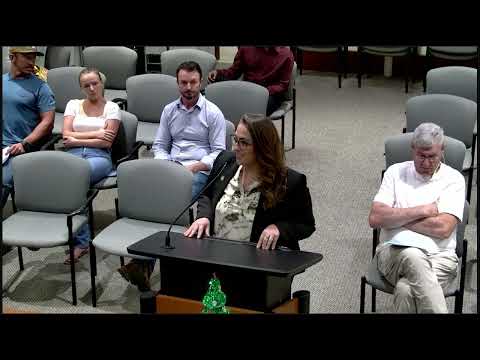
At its Dec. 10 meeting the Town of Lake Clarke Shores continued a multi-meeting discussion over whether to move toward a municipal septic-to-sewer conversion affecting approximately 702 homes along the lake and supporting lake vacuuming/dredging work.
Staff summarized four options: (1) maintain the status quo while pursuing grants and community outreach; (2) place a town-wide ballot question (all registered voters); (3) seek a targeted straw poll of the roughly 702 affected properties (town-conducted referendum limited to impacted homeowners); and (4) hire a professional consultant to advance engineering and shovel-readiness. Staff noted one phase (Micah West) is shovel ready and another application is in process but not yet shovel ready.
Residents and councilmembers debated trade-offs: Vice Mayor John Maples and others argued a straw poll would give clear direction to staff and residents and allow the town to get shovel-ready for funding opportunities. Other councilmembers and the town lobbyist cautioned that a formal vote recorded in town minutes could jeopardize state appropriations for lake vacuuming and dredging, and that grant programs and legislative appropriations remain competitive and uncertain. Representative Deborah Tendridge said legislative advocacy and constituent outreach would help, but also warned the upcoming budget environment could be constrained by the loss of some federal COVID-era funds.
Vice Mayor Maples moved to proceed with Option 3 (a straw poll of affected homeowners); the motion was seconded and failed on a recorded vote, leaving direction that staff continue seeking grant funding, pursue shovel-ready work where prudent and coordinate with legislative advocacy. Councilmembers emphasized the need for more precise cost estimates, a clear funding split and a carefully-worded poll if one is later proposed.
Next steps: staff will continue to pursue grant opportunities for lake vacuuming and septic-to-sewer applications, provide detailed cost and funding scenarios for future council consideration, and return with public-engagement materials if the council directs a straw poll or ballot language in the future.