Get Full Government Meeting Transcripts, Videos, & Alerts Forever!
Get email alerts on the Education Budget topic
No spam. Unsubscribe anytime.
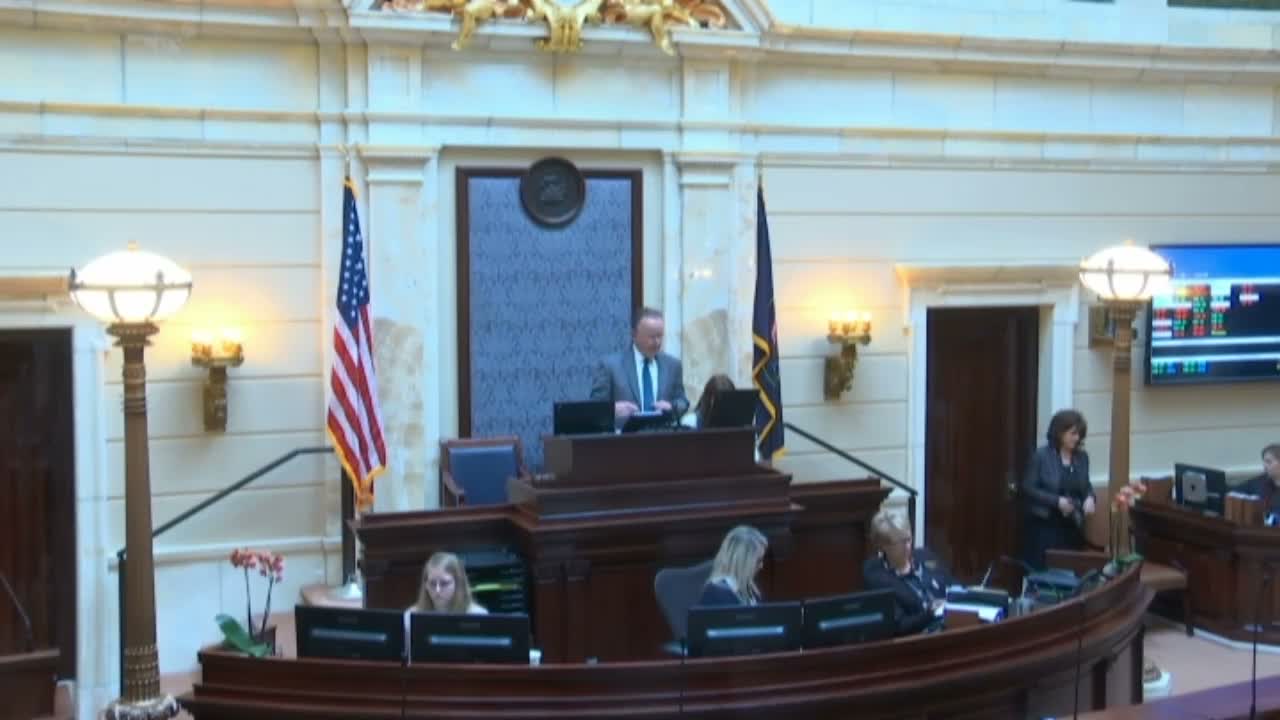
Senate suspends rules and passes House Bill 1, a $5.6 billion public education base budget
Summary
The Utah Senate suspended rules and passed House Bill 1, the public education base budget, adopting the prior year’s base allocations and growth adjustments; sponsor Senator Hilliard said the bill totals roughly $5.6 billion and was approved 27–0 with two senators absent.
Senator Hilliard presented House Bill 1, the public education base budget, and described it as the legislature’s adoption of the prior year’s base allocations and targeted adjustments. “This is the base budget,” Hilliard said, and he walked the chamber through totals and funding sources before moving the bill under suspension of the rules.
The bill’s key figures, as stated by Hilliard during floor remarks, include roughly $5.6 billion in total appropriations; about $3.6 billion coming from state funds; $229.5 million in transfers from restricted state accounts; and roughly $2.0 billion from other restricted revenue sources such as local property tax revenue, federal funds and dedicated credits. Hilliard also cited the statewide WPU value and WPUs used in funding calculations and noted $50.6 million above a baseline figure for certain categorical and charter school replacement increases.
Senators voted to suspend the rules and waive the Utah Constitution’s three-reading requirement to consider HB1 for immediate final passage. The roll call recorded 27 yea votes, zero nays and two absent; President Adams announced the bill passed and would be signed in open session and returned to the House.
Why it matters: HB1 sets the baseline funding for public education programs and establishes the WPU and categorical adjustments that determine school district and charter funding for the upcoming year. Sponsors and appropriators described it as the single largest budget vote the Senate would take that day and a starting point for further budget work this session.
The Senate took the procedural steps required under suspension of the rules — motion to suspend the rules, motion to suspend the three‑reading requirement, and then a final motion to read for second and third time and pass — before recording the final vote. The chamber returned HB1 to the House for signature after passage.
Next steps: The bill will be signed by the president in open session and transmitted back to the House for the speaker’s signature as the legislature continues related budget work.