PA Department of Banking and Securities outlines bank, credit union and online‑only account basics
Loading...
Summary
Katrina Boyer of the Pennsylvania Department of Banking and Securities explained differences between banks, credit unions and online‑only institutions, described overdraft risks and deposit insurance limits, and listed consumer complaint resources.
Katrina Boyer, investor education coordinator for the Pennsylvania Department of Banking and Securities, outlined how banks, credit unions and online‑only institutions differ and what consumers should ask before opening an account. "It—s important to understand the differences between the two," Boyer said, emphasizing ownership, fee structures and customer service channels.
Boyer opened by distinguishing banks, which operate for profit and have shareholders, from credit unions, which she described as nonprofit and owned by their members. She noted savings banks—historically focused on home‑purchase savings—are now less common but still in operation. Boyer recommended matching account type to need: whether a consumer needs check‑writing, short‑term savings or an emergency fund.
On online access, Boyer separated "online banking"—digital access tied to a physical branch—from "virtual" or online‑only institutions that have no walk‑in locations. She warned virtual institutions can make some services (cash deposits, certified checks, in‑person teller conversations) less convenient but said they often offer the same basic account types and security measures. She framed these points as tradeoffs: virtual banks may offer lower fees or higher savings rates but not in‑person service.
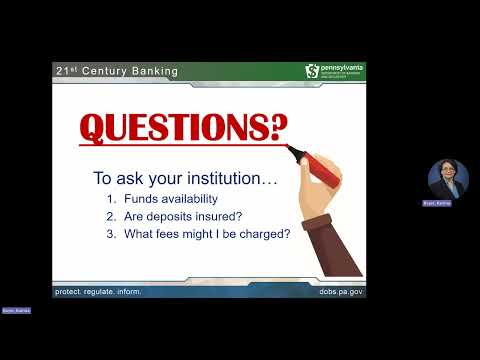
Boyer advised close review of disclosures and asked consumers to confirm fee waivers (for example, linked to direct deposit), how transactions are processed (processing order can affect overdraft charges), and when deposited funds will be made available. She recommended questions to ask at account opening, including: how long holds on deposited checks last; whether paper statements incur a fee; and how the institution handles transaction processing order.
On overdrafts, Boyer explained an overdraft occurs when more money leaves an account than is available. She observed some institutions charge about $45 per overdrafted item and that multiple small overdrafts can quickly compound into more than $125; some institutions also impose daily fees until the balance is restored. To reduce risk, Boyer suggested balance alerts, linking savings accounts, or arranging a line of credit (noting a line of credit accrues interest).
Boyer also reviewed the federal "opt‑in" requirement for debit card overdraft coverage at point of sale: if a consumer opts in, a point‑of‑sale transaction that would overdraw the account may be honored (and incur overdraft fees); if a consumer does not opt in, the transaction is typically denied at checkout.
She warned that repeated overdrafts and other account problems can lead an institution to close an account and report the history to ChexSystems, a banking verification service, which can limit the ability to open new accounts for about seven years. As a remedy, Boyer described second‑chance or limited‑use accounts that may restrict transactions, require financial‑literacy classes, and convert to traditional checking after meeting positive‑balance terms for a year or two.
Boyer emphasized deposit insurance limits and coverage: "The Federal Deposit Insurance Corporation and the National Credit Union Administration ensure your accounts up to $250,000 per depositor at each institution," she said, and cautioned that FDIC/NCUA coverage applies to deposit accounts (checking, savings, money market, CDs) and does not cover investments.
For complaints and help, Boyer directed Pennsylvania consumers to the Department of Banking and Securities at the toll‑free number displayed in the presentation (800‑PA‑BANKS) and listed federal resources including mybank.gov for federal banks, ncua.gov for credit unions, consumerfinance.gov for CFPB resources, fdic.gov for FDIC questions and the Federal Reserve consumer help line. She closed by reminding viewers they must complete the session quiz and discussion questions to receive participation credit.
The presentation was a recorded consumer‑education session and concluded without any formal votes or actions.