Get Full Government Meeting Transcripts, Videos, & Alerts Forever!
Get email alerts on the Pilot Finance And Redevelopment topic
No spam. Unsubscribe anytime.
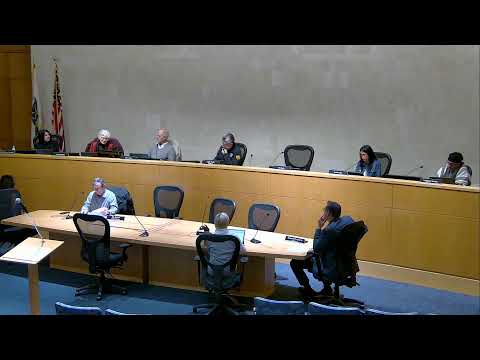
Princeton council approves 30-year PILOT for 108 Stockton after hour-plus hearing on schools and neighborhood impacts
Summary
After an extended public hearing about school funding and neighborhood scale, Princeton’s council adopted Ordinance 2024-42 to authorize a 30-year long-term tax exemption (a PILOT) and a financial agreement with HP108 Stockton Urban Renewal LLC, approving a negotiated 12% payment-in-lieu rate and projecting roughly $48.6 million to the municipality over the term.
Princeton’s mayor and council voted to approve Ordinance 2024-42, authorizing a long-term tax exemption and a financial agreement with HP108 Stockton Urban Renewal LLC for parcels in the former borough area. Council members recorded unanimous affirmative roll-call votes and carried the ordinance after a public hearing dominated by questions about how pilot revenue would affect the school district and the neighborhood.
The council’s municipal attorney, Steve Lennick, and municipal financial advisor Sherry Tracy of Phoenix Advisors told the council that the redevelopment agreement and financial review support a 12% pilot over a 30-year term. Tracy said the committee negotiated the 12% rate because, without a pilot, the project’s margins were “very thin” and the development would be difficult to finance. Lennick said the negotiated pilot would preserve design features such as underground parking and enhanced stormwater systems and estimated the agreement would yield approximately $48,600,000 in revenue to the municipality over the 30-year term.
Why it matters: Council and staff framed the pilot as a tool to make the redevelopment financeable and to meet Princeton’s affordable-housing obligations under state law. Lennick and Tracy said the pilot is intended to allow a development that would otherwise be infeasible to proceed while providing audited transparency: the pilot agreement requires annual audits and the right to inspect developer books, they said. Tracy also noted the 12% pilot produces about $8 million more than a 10% minimum over the 30-year term.
During a three-minute public-comment period, residents voiced opposing views. Former councilwoman Jo Butler urged postponement and raised neighborhood-impact concerns — traffic, loss of tree canopy and effects on a historic district — calling the timing of the vote (shortly before holidays) inappropriate. ‘‘I would urge you to postpone this decision for a few weeks to give the public the time to get through the holidays and give this the attention it deserves,’’ Butler said. Other residents, including Kristen Munson and Wasim Abida, pressed the council on whether pilot revenue would meaningfully benefit schools; Munson said special-education and classroom funding made her ‘‘worried’’ about reduced per-pupil resources if revenue channels change.
Council and staff answered that the long-term tax-exemption law structures pilot payments differently from property tax distributions: ‘‘95% that is received is retained by the municipality, and 5% is sent to the county,’’ Lennick said, adding that the school district is funded under a different state framework and is not automatically included in pilot calculations. He and other council members said the municipality can later work with the Board of Education to direct pilot revenue toward capital projects, but that state law prevents the town from pledging pilot revenue to the schools in advance of receipts and that site-plan approval and construction remain years away.
Opponents argued the pilot effectively subsidizes the developer. A commenter identified as Mr. Head said the developer was seeking ‘‘an annuity’’ and characterized the arrangement as a roughly $40 million subsidy that would shift costs to taxpayers. Lennick replied that the financeability analysis and bank letters were municipal requirements and that those reviews support the conclusion that without the pilot the project would not be built.
Process and next steps: The council closed the public hearing and approved the ordinance by roll call. The ordinance authorizes the financial agreement but does not substitute for site-plan approval; developers must still seek and obtain planning and permit approvals before construction can begin. Council members and staff said they expect further discussions with the Board of Education and public updates as funding flows and audits are received.
The council took the vote after one of the lengthiest public-comment periods of the meeting; no additional formal actions on the project were recorded at this session.