Get Full Government Meeting Transcripts, Videos, & Alerts Forever!
Get email alerts on the Archaeology And Stakeholders topic
No spam. Unsubscribe anytime.
Task force urges archaeological caution, historical-commission coordination and tribal outreach
Summary
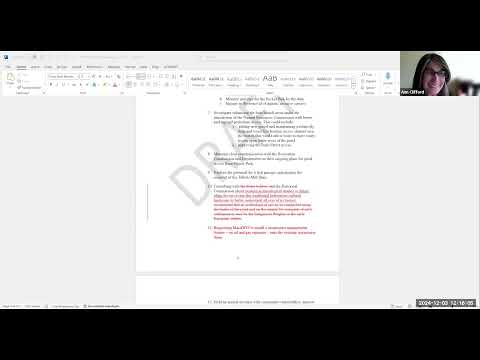
Members recommended that archaeological work be handled through the historical commission, that stakeholder landowners (including Scouts for Scout Island) be consulted before any surveys or digs, and that the report include general Indigenous lifeways and river-system context while keeping site maps confidential under state law.
Speaker 4 (Task force member, historian) said Concord has extensive archaeological study and emphasized that archaeological maps and site information are protected by state law; the historical commission is currently conducting a historic preservation planning study and would be the official body to coordinate surveys and state permits. Speaker 1 argued the draft should still require outreach to stakeholders who own or manage properties that could be affected (for example, the Scouts for Scout Island), and speakers agreed the historical commission should perform surveys and interface with stakeholders rather than task-force staff directly.
Speaker 3 shared independent research on Indigenous lifeways in the Concord–Merrimack river system and urged that the draft acknowledge the broader cultural landscape (Concord River, Merrimack River, Pawtucket Falls) rather than use unfamiliar watershed labels without explanation. The group agreed to list key rivers in parentheses so readers unfamiliar with watershed terminology understand regional connections.
A separate suggestion from Speaker 1 — to consider renaming Warner's Pond to Neshoba Pond to honor original inhabitants — was characterized as potentially controversial and deferred for separate discussion.
The task force resolved to keep archaeology references generalized in the public report (to avoid sharing protected maps), to direct the historical commission to coordinate formal archaeological work and stakeholder outreach, and to include contextual language about Indigenous lifeways and river connections without releasing sensitive site-level data.