Get Full Government Meeting Transcripts, Videos, & Alerts Forever!
Get email alerts on the Commercial Parking topic
No spam. Unsubscribe anytime.
Concord board debates parking‑change wording for commercial areas; members favor narrow interim fix
Summary
Planning Board members questioned draft language that would exempt certain changes of commercial use from additional parking, debated downtown combined business‑residence impacts, and signaled preference to limit immediate amendments to a footnote while deferring larger zoning rewrites.
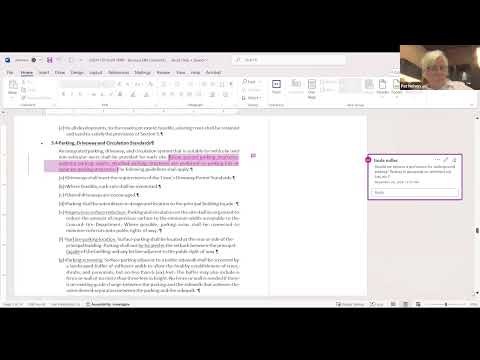
The Concord Planning Board spent much of its Dec. 3 meeting on proposed commercial parking bylaw amendments, including a contested footnote that would limit when a change in use triggers additional off‑street parking.
Staff and Economic Vitality Committee representatives summarized town council edits and the committee’s intent: allow small business use changes without automatically requiring new parking in locations where expanding building footprint is impractical. But members flagged confusing wording that read in draft as “a change in use from one permanent use to another permanent use that does not increase the square footage of the building shall not be required to provide additional parking.”
“Change in use doesn’t increase the square footage,” several members said, noting the clause could be clearer. The board and staff discussed alternatives such as deleting the square‑footage phrase or rewording the sentence to apply to changes that do not involve an increase in occupied or utilized square footage.
Members tested edge cases — converting a 1,000‑square‑foot retail space into a 1,000‑square‑foot restaurant, or replacing a bookstore with a daycare — to illustrate how parking demand can vary by use. Some members argued restaurants and daycares bring materially different parking needs, while others said the town must balance economic vitality in constrained downtown parcels against potential parking stress.
A parallel issue concerned combined business‑residence conversions (allowing residential use above or attached to businesses). Board members worried that removing a parking trigger for some conversions could produce downtown residential units with no dedicated parking and limited overnight street parking, especially in winter. Staff noted that in many districts combined business‑residence conversions are already subject to special‑permit provisions and open‑space requirements and that broader zoning revisions are best handled in next year’s zoning review.
After extended discussion, several members urged limiting the immediate change to the footnote addressing business‑to‑business use swaps and deferring any substantive rewrite of combined business‑residence rules to the larger zoning review scheduled next year. Staff agreed to prepare a clean draft, circulate it to stakeholders and the Economic Vitality Committee, and reconvene for a vote before the warrant deadline.
The board also discussed outreach to downtown property owners and business groups before finalizing warrant language.