Get Full Government Meeting Transcripts, Videos, & Alerts Forever!
Get email alerts on the Budget Guidelines topic
No spam. Unsubscribe anytime.
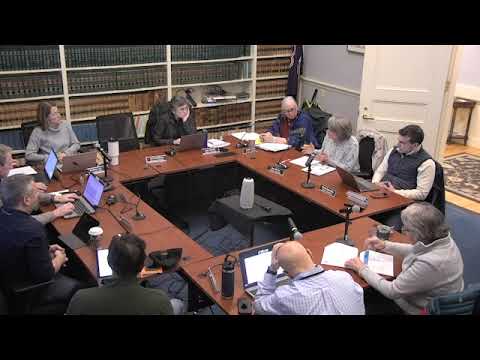
Concord Finance Committee adopts 2.44% preliminary spending guideline after debate over tuition and levy risk
Summary
The Concord Finance Committee voted 12–1 to set a preliminary FY26 guideline of 2.44% overall, pushing budget units to find savings while treating unpredictable costs (out‑of‑district tuitions, certain capital) as separate items and inviting feedback before a final December vote.
The Concord Finance Committee on Wednesday adopted a preliminary guideline of 2.44% for FY26 spending subject to guidelines, sending a signal to the town and school budgeting units to find savings while the committee continues to refine allocations.
The guideline was the outcome of a lengthy presentation and debate led by Lindsey Liss, who walked members through four scenarios that modeled different ways to treat uncontrollable costs such as out‑of‑district special‑education tuitions, middle‑school savings and certain tier‑1 capital purchases. "When I put in all of the numbers … the total operating increase for spending subject to guidelines came in at 3.57%" under one approach, Liss said, illustrating how methodology alters the aggregate impact.
Why it matters: the committee is trying to hold unused levy capacity steady while acknowledging large, unpredictable school costs. Under the adopted scenario the burden is shared differently across the town and the two school units: committee materials show CPS and CCRSD would face different effective guideline percentages once uncontrollable items and savings are accounted for, and the committee quantified the dollar reductions each unit would need to meet the aggregate target.
What members debated: many members pressed on who should bear the risk of out‑of‑district tuition spikes — the schools or town reserves — and whether to carve those costs out of the guideline calculation entirely. Paul Rodriguez and others argued carving out uncontrollable costs creates clearer guidance for controllable spending; Pat Guyer and school representatives urged care because reimbursements and student needs can change rapidly. Committee member Carlin Reed proposed a middle path in earlier discussion but ultimately the assembly favored the more stringent preliminary number as a negotiating posture.
The vote and next steps: a motion to adopt the 2.44% preliminary guideline was seconded and approved by roll call, 12–1. The committee chair said memos and a supporting spreadsheet showing unit‑level underlying numbers and the committee's treatment of uncontrollable items will be sent to each budgeting unit and Carlisle by end of day Monday; the committee invited feedback by Dec.16 and scheduled a special meeting after a joint capital planning session on Dec.16 to review comments ahead of a Dec.19 final vote.
Context and caveats: presenters emphasized these are preliminary guidelines meant to inform budget formulation, not final appropriations. Lindsey Liss and administration staff noted state reimbursements for out‑of‑district tuitions (the "circuit breaker") have lagged tuition increases, complicating forecasts and cash flow. The committee also asked staff to prepare tax‑impact examples for a typical single‑family residence so the public can see what guideline choices mean for taxpayers.
The committee adjourned after agreeing to pursue a policy workgroup to draft formal guidance on reserve targets, free‑cash practices and potential stabilization funds.