Get Full Government Meeting Transcripts, Videos, & Alerts Forever!
Get email alerts on the School Facilities topic
No spam. Unsubscribe anytime.
Concord Middle School building committee hears options after sixth-grade lockers built too small; decision deferred
Summary
Designers told the Concord Middle School Building Committee on Nov. 1 that lockers already fabricated on site are too small for typical sixth-grade backpacks. The design team estimated prefabricated replacements at about $80,000–$90,000; the committee requested more analysis and will revisit the decision at its Nov. 14 meeting.
Concord, N.H. — The Concord Middle School Building Committee on Nov. 1 reviewed a design mismatch that left recently fabricated sixth-grade lockers far smaller than intended and discussed whether to replace them before students move in.
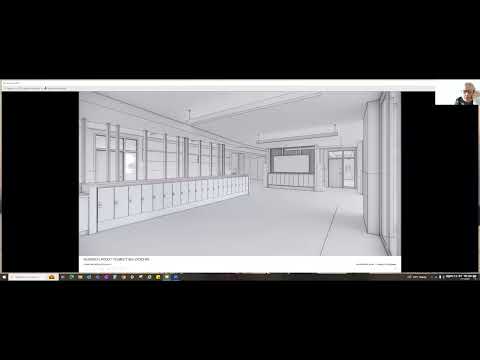
Design team representative Jen said the current on-site lockers measure about 12 inches wide by 15 inches high by 12 inches deep and “the lockers themselves would be about 80 to $90,000 alone just to replace the lockers” if the committee opts for prefabricated units sized to fit backpacks. The team proposed target lockers roughly 12 inches wide by 30 inches high by 15 inches deep and presented plan views that would single-stack lockers in the team commons and double-stack along side corridors to achieve about 80 lockers per team (roughly 240 total for sixth grade).
Committee members and staff described both practical and instructional concerns. Members said typical sixth-grade backpacks are heavy and large; one committee member demonstrated a packed backpack and reported measurements of roughly 16 by 13 by 12 inches, and multiple members warned that undersized lockers would not support the project’s educational intent to teach executive-functioning by having students store materials between class periods. Designers acknowledged a disconnect between the design intent and the fabricated units and said the millwork already installed is not readily salvageable and would likely cost more to modify than to rebuild.
The discussion also covered alternatives and mitigation: converting nearby counter/‘back-of-house’ areas to locker space, switching to heavy-duty metal lockers (with similar lead time but different aesthetics and acoustics), and salvaging or refurbishing metal lockers from other district buildings (Sanborn and Peabody) if sizes and conditions allow. The design team said it will vet the dimensions and viability of reuse options and provide refined costings, including installation and removal costs and any miscellaneous carpentry or electrical work required.
On budget context, project staff reported approximately $2,600,000 remaining in hard-cost contingency and $600,000 in soft-cost contingency; the locker change would draw from the hard-cost contingency but was not included in the current forecast. On schedule, staff said replacement work likely has a 10–12 week lead time and recommended April break or the end-of-school window for major installation if the committee decides to pursue it; they said locker work is not a certificate-of-occupancy blocker.
The committee did not vote on the matter. Members asked the design team to prepare a fuller scenario that shows what continued use of the smaller lockers would look like in practice, a refined cost and timeline comparison among options (refabricate, prefab, metal, or reuse), and to arrange an onsite viewing and photos/video for the group. The committee agreed to reconvene the topic at its next regular meeting on Nov. 14.
A procedural motion to adjourn was moved and seconded at the meeting’s close and carried.