Get Full Government Meeting Transcripts, Videos, & Alerts Forever!
Get email alerts on the Record Sealing topic
No spam. Unsubscribe anytime.
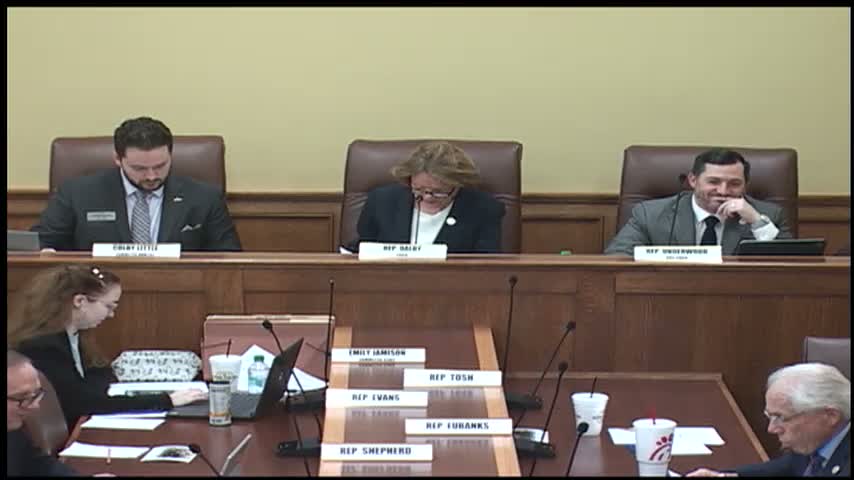
House Judiciary Committee rejects bill to tighten sealing rules for theft records
Summary
After testimony from veterans’ legal advocates and public defenders, the committee voted down Senate Bill 277, which would have made certain theft convictions ineligible for sealing and added a look-back period prosecutors could use for enhancement.
Members of the House Judiciary Committee voted down Senate Bill 277 after extended testimony from defense and veterans’ advocates who warned the change would harm people trying to rebuild their lives.
State Senator Josh Bryant presented the bill as a correction to a 2023 change that made certain thefts 'enhanceable.' Bryant said the bill was intended "to add that look back period for the misdemeanor violation of theft of property" so enhanced offenses would remain ineligible for sealing under the comprehensive criminal-sealing law.
Zach Baumgarten, pro bono program director for the Veterans Legal Services Clinic at Bowen School of Law, urged the committee not to make veterans and people who paid restitution wait longer to seal misdemeanor records, saying the proposal would "greatly harm veterans and also just regular civilians who are trying to seal their records." He described how sealing currently requires completion of sentence and restitution and warned the bill would be disproportionately punitive.
Greg Parish, executive director of the Arkansas Public Defender Commission, and Tina Bowers Lee explained how sealed records are administratively segregated but can still be reported on the Arkansas Crime Information Center (ACIC) and used for enhancement under the existing comprehensive act. Bowers Lee told the committee that under current ACIC procedures "a sealed conviction is still reported" and that the comprehensive act (cited in testimony) already allows sealed convictions to be used for enhancement in later prosecutions.
Prosecutors including David Etheridge and Chris Walton argued repeat theft offenders are a serious problem and described the bill as a tool for prosecutors, but the committee ultimately declined to advance the measure. When the motion to "do pass" was called, the chair announced, "the noes have it" and declared the bill failed.
What’s next: The defeat in committee means SB 277 will not move from House Judiciary unless refiled or returned by leadership; sponsors and opponents signaled disagreements about the balance between public safety tools and the collateral consequences of long-term records on employment and housing.