Get Full Government Meeting Transcripts, Videos, & Alerts Forever!
Get email alerts on the Archives Preservation topic
No spam. Unsubscribe anytime.
Concord archivist seeks funding to preserve and digitize 1770–1795 tax books
Summary
Town archivist Nate Smith asked the Community Preservation Committee to fund conservation and digitization of 18th‑century Concord assessor books (circa 1770–1795), citing research value for genealogy, economic history and records of enslaved people; the vendor would stabilize fragile bindings and produce high‑quality digital images for public access.
Nate Smith, the Town of Concord archivist, told the Community Preservation Committee on Oct. 8 that the town’s eighteenth‑century assessor books — covering roughly 1770–1795 — need conservation and digitization to preserve fragile originals and make the material accessible to researchers.
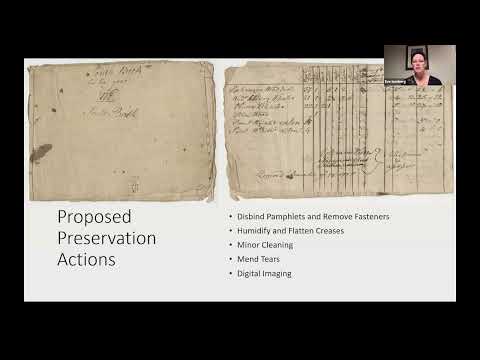
"We're looking to fund the preservation and digitization [of] eighteenth‑century assessor's records, and this is spanning the years 1770 to 1795," Smith said, describing dense tax ledgers that list poll taxes, real estate and categories such as livestock and slaves. He said stored basement conditions had left some discoloration and localized mold damage on binding corners.
Smith said the vendor proposed to disbind volumes, remove metal fasteners, humidify and flatten major creases, mend tears with low‑impact Japanese paper, and create high‑quality digital images for the town's repository. He named the Northeast Document Conservation Center as the vendor his office has used previously.
The archivist told committee members the project’s research value extends beyond genealogy. "There is some research value here," he said, pointing to potential studies of town economics year‑to‑year, population changes and evidence about enslaved people and slave ownership.
Committee members pressed for details on condition and timeline. Smith estimated about 41 pamphlets for the 25‑year span and said work could be staged; if funded next July, he expected partial returns in February–March of the following year. He noted existing microfilm copies but said digital images would allow remote access without handling fragile paper.
Smith also reviewed prior archives work funded through the town’s Community Preservation Act process, including water and sewer map digitization and ongoing conservation of a Declaration of Independence copy pending appraisal and insurance arrangements.
The committee asked practical questions about long‑term storage after treatment; Smith said best practice is to interleave documents, place them in acid‑free folders and store them in a climate‑controlled vault shared with the library. He estimated Concord's population around 1775 at roughly 1,400, based on extrapolated sources.
No funding vote occurred at the Oct. 8 meeting. Committee members thanked Smith and asked staff to ensure any grant agreement includes transport, insurance and posting logistics before the project proceeds.