Get Full Government Meeting Transcripts, Videos, & Alerts Forever!
Get email alerts on the Emergency Medical Services topic
No spam. Unsubscribe anytime.
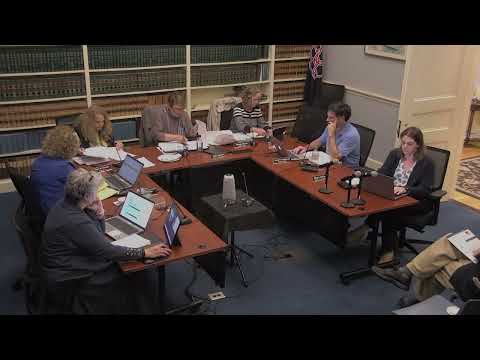
Concord Fire Department proposes bringing ALS in-house; Select Board signals support for ARPA equipment funding
Summary
Fire Chief Tom Judge told the Select Board the department plans to stop subcontracting advanced life support (ALS) and train existing firefighters as paramedics. Officials said a FEMA grant covers most training costs but requested ARPA funds for capital equipment; the board expressed support to proceed.
Fire Chief Tom Judge proposed that the Concord Fire Department stop subcontracting advanced life support (ALS) and provide ALS directly with train-the-staff programs and existing shift coverage. The plan, presented Oct. 7, aims to raise the town's ALS treatment percentage and reduce delays caused by third-party intercepts.
Judge said Concord currently receives ALS-level care on about 42% of transports versus higher shares in neighboring towns such as Lexington (66%), and attributed the gap to reliance on a third-party provider whose availability and positioning vary by call. "We're gonna stop subcontracting and just provide the service ourself," Judge said during his presentation.
Dr. Ryan Kring, emergency physician at Emerson Hospital and Concord's EMS medical director, told the board that ALS interventions (medications, advanced airway management, invasive or noninvasive ventilatory support and other time-sensitive procedures) can materially affect patient outcomes for unresponsive patients, chest pain and major trauma. He said local ALS capability also gives the town more control over which hospital is the most appropriate destination in complex cases.
Assistant Chief Brian Whitney reviewed projected revenue and cost changes. Using current billing assumptions and about 1,980 transports, the department projected additional net revenue of roughly $459,000 in the first year and about $487,000 by fiscal 2027 if Concord provides ALS in-house. He estimated incremental operating costs of about $300,000 annually to reflect paramedic pay differentials, certifications and supplies. Whitney said a FEMA grant was written for $995,000 and will cover the bulk of personnel training costs; capital equipment (monitors, IV pumps and refrigerated medication storage) would be the primary incremental ARPA request.
On operational benchmarks, Whitney described an 8-minute ALS-target metric (4 minutes to BLS arrival plus 4 additional minutes for ALS) and said Concord meets the BLS travel-time target about 80% of the time but meets the 8-minute ALS benchmark only about 53% of the time under the current third-party model. He said in-house ALS staffing would reduce intercept delays and improve on-scene ALS availability.
During public comment, resident Wick Sloan recounted personal experiences with EMS and urged the board to weigh the human consequences alongside financial metrics: "Our job is to make sure everybody is safe," Sloan said, expressing gratitude for first responders.
The board did not take a formal binding vote on ARPA funding at the meeting but several members stated they supported the town manager's proposal to use ARPA for necessary equipment and to pursue the in-house ALS implementation. Select Board members asked staff to continue refining financial assumptions, equipment lists and implementation timelines before any formal appropriation.
Next steps: staff will return with detailed capital requests, refined revenue/cost projections and a proposed funding plan that accounts for FEMA grant proceeds and the ARPA request.