Get Full Government Meeting Transcripts, Videos, & Alerts Forever!
Get email alerts on the Historic Windows topic
No spam. Unsubscribe anytime.
Historic‑district panel approves vinyl replacement windows for 214 Route 6A after extended debate, 4–1
Summary
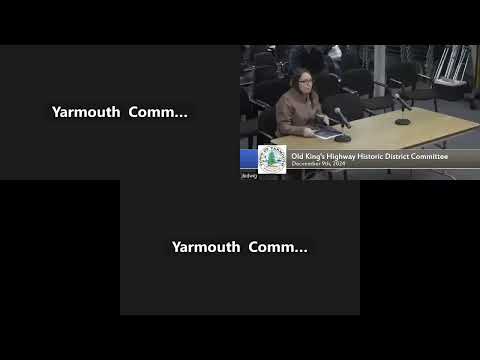
After more than an hour of public discussion over historic integrity and energy savings, the Town of Yarmouth Historic District Committee voted 4–1 to allow Catherine Dolan to replace 21 windows at 214 Route 6A with vinyl thermal units, provided exterior 6‑over‑6 applied grids are installed on all windows and simulated divided‑light is added to the five front gable windows; the applicant will cover upgrade costs not funded by the housing assistance program.
The Town of Yarmouth Historic District Committee voted 4–1 to approve a compromise plan allowing owner Catherine Dolan to replace 21 windows at her 214 Route 6A home with triple‑pane vinyl units, provided the replacement includes exterior applied 6‑over‑6 grids on all windows and simulated divided‑light on the five front gable windows most visible from Route 6A.
The decision followed extended oral testimony from Dolan, who said energy efficiency and long‑term affordability for her family drove the request. "I want the home to remain in my family," Dolan said during the meeting, arguing that weatherization help available now could prevent future hardship. The applicant presented information from a housing‑assistance program that can fund vinyl thermal units but not wooden windows that meet the program’s efficiency thresholds; the committee discussed whether that funding instrument constrains preservation choices.
Committee members pressed on specific tradeoffs and costs. The housing assistance vendor advised that basic funded vinyl windows would be supplied without decorative grids; adding exterior applied 6‑over‑6 grids is an upgrade priced at roughly $110 per window, and a simulated divided‑light option was quoted as about $310 per window. Dolan said those upgrade costs could total roughly $8,820 for all 21 windows if she accepted the full simulated‑divided‑light upgrade, and that she could likely cover at least the grid fee while the larger simulated‑light add‑on would be a greater burden.
After debate about preservation priorities and neighborhood precedent for vinyl windows on 6A, the committee’s compromise motion (moved and seconded on the record) authorized 21 vinyl windows with exterior applied 6‑over‑6 grids, and required simulated divided‑light only for the five front gable windows facing Route 6A. The vote carried 4–1. A committee member recorded a single dissent (recorded vote: 4 yes, 1 no).
The committee and applicant also discussed alternative approaches, including restoring original wooden sashes (applicant supplied an estimate from a preservation contractor for roughly $1,800–$2,000 per window for full restoration) and separating the five gable windows from the larger funding package so they could be addressed separately. The motion as approved contemplates that the housing‑assistance program will be asked to fund the work consistent with the committee’s exterior‑grid condition; any elements that would alter materials or colors beyond the approved scope would require a return to the committee.
The committee closed the agenda action by having Dolan sign the approval paperwork and by advising her to confirm upgrade cost details with the housing‑assistance representative. The committee noted the practical tension between energy‑efficiency rebates and historic‑preservation goals and recorded the agreement as a narrowly tailored compromise rather than an endorsement of wholesale use of vinyl on highly visible historic fabric.
The committee’s vote and the applicant’s signed paperwork start the 10‑calendar‑day appeal period once the decision is filed with the town clerk. If Dolan proceeds, the work will be subject to the conditions the committee recorded at the meeting.