Get Full Government Meeting Transcripts, Videos, & Alerts Forever!
Get email alerts on the Airport Ground Transportation topic
No spam. Unsubscribe anytime.
Committee approves bill to require airport agreements for peer-to-peer car rentals after testimony from operators and airports
Summary
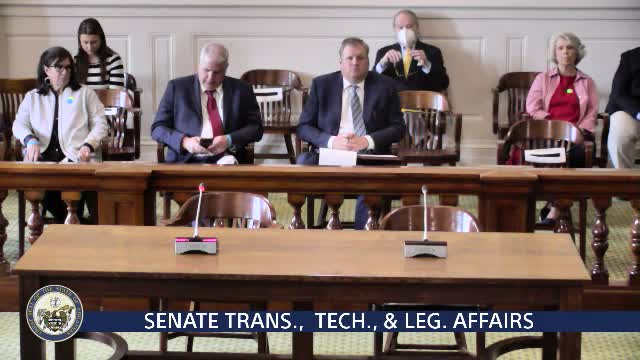
The Senate transportation committee advanced legislation to require peer-to-peer car-sharing platforms to secure airport agreements and meet safety, parking and insurance conditions after testimony from Turo and multiple airport operators; the measure passed on a voice vote.
Lance Eads, a state senator sponsoring Senate Bill 686, asked the committee to advance legislation that would require peer-to-peer car-sharing operators to secure agreements with airports before operating on airport property. He said the change would level the playing field and improve passenger safety.
Turo representative Dustin Bridal told the committee the company has been negotiating with Little Rock and Northwest Arkansas National Airport (XNA) but “there is not agreement in place yet.” Bridal said sticking points include airport demands for parking spaces, limits on the number of vehicles allowed to operate, a surety bond, and a proposed revenue share. “They want 10% of our gross proceeds. We responded with 5%,” Bridal said, adding Turo is working toward a deal and requested additional time to continue negotiations.
Kelly Johnson, chief operating officer at Northwest Arkansas National Airport, and Brian Malinowski, executive director of Little Rock Municipal Airport, said the airports’ priorities are public safety, regulatory parity and public‑interest oversight. Johnson said airports lack proof of insurance for operators using third‑party apps, do not know where transactions are occurring, and must prevent unattended vehicles and curbside congestion. “We want a safe, well lit, and identified location,” Malinowski told the committee, adding airports plan to list authorized operators on their websites once agreements are in place. Johnson also described a planned $30,000,000 capital flyover project to protect traffic flow around the airport.
Airport witnesses defended asking for the same revenue and concession terms applied to existing ground-transportation operators, saying those terms maintain parity rather than block competition. Johnson said prior negotiations with rideshare and taxi operators resulted in trip fees intended to equalize terms across ground-transportation providers.
After testimony and a brief question-and-answer period, Senator Eads closed by saying the bill ensures peer-to-peer operators meet the same requirements as other commercial operators. Eads moved that the committee report the bill favorably; the motion was seconded by Senator English and carried on a voice vote. The chair announced the bill passed in committee.
The committee record shows no roll-call tally; the committee advanced SB 686 with a voice vote and noted continued dialogue between Turo and airport officials. The bill’s proponents said it aims to preserve competition while giving airports authority to require insurance, identify pickup areas and apply nondiscriminatory terms. Opponents requested more negotiation time and noted remaining disagreements over specific contract terms.