Get Full Government Meeting Transcripts, Videos, & Alerts Forever!
Get email alerts on the Rail Essential Workers topic
No spam. Unsubscribe anytime.
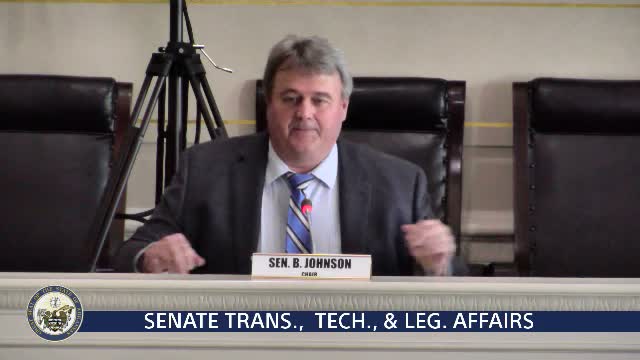
Senate committee adopts amendment to deem train crews essential during federal pandemics
Summary
A Senate transportation committee approved an amendment designating train crews as essential workers during a CDC-declared national pandemic and passed the bill as amended after union testimony and brief industry rebuttal.
The Senate Transportation, Technology & Legislative Affairs committee on a voice vote approved an amendment and passed legislation that would deem train crews ‘‘essential workers’’ in Arkansas if the Centers for Disease Control and Prevention declares a national pandemic.
The amendment, offered as a full substitute to the underlying bill, removes an emergency clause and defines ‘‘train crew’’ to include conductors, engineers, switchmen, brakemen and firemen, and requires Federal Railroad Administration certification for those roles. The amendment’s sponsor said the change is intended to make the designation proactive rather than reactive in future public-health emergencies.
Gerald Sale, state legislative director for SMART Transportation, told the committee that designating rail employees as essential is a safety and security measure, arguing that "if rail workers aren't essential, I don't know who is" and noting rails deliver critical goods such as electricity-related materials and grain. Wayne Denson of the Brotherhood of Locomotive Engineers and Trainmen said the change would remove the need to ‘‘scramble’’ to secure protections for crews in a future pandemic.
Representatives of freight carriers pushed back. Michael Garrick of BNSF Railway said federal guidance and Department of Homeland Security designations had been used during the COVID-19 response and questioned whether new state law was necessary for a future, undefined pandemic. Garrick also warned that a statute written without knowledge of future pandemic dynamics could prove unwieldy.
Committee members queried whether a state-level essential designation could conflict with interstate-commerce protections or impede operations across state lines. Proponents cited Title 49 U.S. Code §20106 and examples of existing state safety laws, saying states often adopt measures to protect public safety and coordinate with carriers to avoid burdens on interstate commerce.
After the debate, Senator Tucker moved the bill as amended; Senator Chesterfield seconded the motion and the committee adopted the amendment and passed the bill on a voice vote.
The committee then moved to its next agenda items.