Get Full Government Meeting Transcripts, Videos, & Alerts Forever!
Get email alerts on the Zoning Alcohol Ordinances topic
No spam. Unsubscribe anytime.
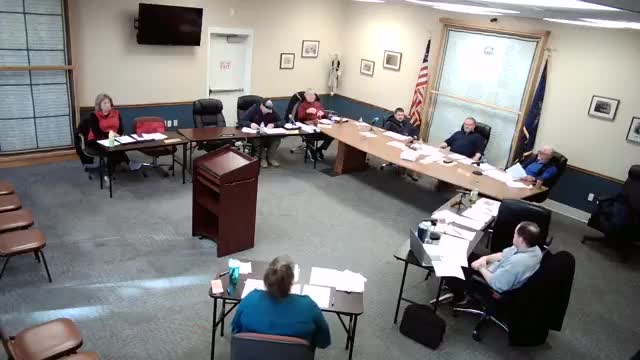
Spencer County panel approves zoning changes to allow microbreweries, craft distilleries and small farm wineries
Summary
After debate over setbacks, buffers and conditional‑use requirements, Spencer County commissioners approved a package of zoning amendments to permit microbreweries, craft distilleries and small farm wineries in multiple zones with standardized safety, water and signage rules.
Spencer County planning commissioners voted to amend several sections of the county zoning code to allow microbreweries, craft distilleries and small farm wineries in agricultural and commercial zones without requiring conditional‑use approval.
Commissioners said the intent of the amendments is to treat small alcohol‑production businesses as permitted uses with standards rather than require a separate conditional‑use process. "The intent of this use is to allow microbreweries supporting eating and drinking establishments, event facilities, or similar uses," a board member summarized during the discussion.
Why it matters: supporters argued the revisions simplify permitting and make rules consistent across distilleries, breweries and wineries, potentially encouraging small local businesses and farm‑based destinations. Opponents and some commissioners raised concerns that removing conditional‑use review reduces an enforcement checkpoint and that certain dimensional standards could still make development impractical.
Key provisions approved: the package keeps a 10‑acre minimum for Ag‑1 sites where specified, requires processing and production to be in fully enclosed buildings, sets a typical maximum building size around 20,000 sq ft and 50 ft height where listed, and maintains a 25% agricultural/conservation dedication on some parcels. The draft retains production caps where applicable (examples discussed in the hearing: 15,000 barrels per year for some malt beverage classes and higher caps in larger commercial districts). Signage limits were adjusted (small sign allowance increased from 2 to 8 square feet in one provision). The commission also removed routine road‑study requirements from several items and reiterated that facilities must comply with ABC laws and relevant state building, fire, environmental and Division of Water regulations.
Safety and enforcement: commissioners discussed alternatives to conditional use, including variances and enforcement through nuisance/fine processes. One member noted that fines are typically assessed through court processes and that a conditional‑use hearing can provide a forum to require cleanup or corrective actions; others argued similar outcomes can be reached through clearer ordinance language and existing enforcement authorities.
Votes at a glance: the panel moved and approved a series of ordinance amendments during the meeting: Ordinance 8 (small farm wineries) — adopted; Ordinance 9 (craft facility/B1) — adopted; Ordinance 10 (B1 microbrewery) — adopted; Ordinance 11 (craft distillery in commercial zones) — adopted; Ordinance 12 (additional microbrewery amendments) — adopted; Ordinance 13 (craft distillery in heavy commercial/B3) — adopted; related Ag‑1 text changes approving a named brewery concept (mover/second recorded) were also approved. Motions were carried by voice vote with ayes called verbally.
What’s next: staff were asked to produce an updated zoning code book incorporating the changes and to return with clarifications for items flagged during discussion (definitions for conservation area, precise cross‑references, and any necessary numeric renumbering). The commission set aside the detailed drafting for final codification and will publish the adopted text when the administrative updates are complete.
All direct quotes in this article are taken from the public hearing transcript and are attributed to speakers recorded in the meeting minutes.