Get Full Government Meeting Transcripts, Videos, & Alerts Forever!
Get email alerts on the Film Tax Credit topic
No spam. Unsubscribe anytime.
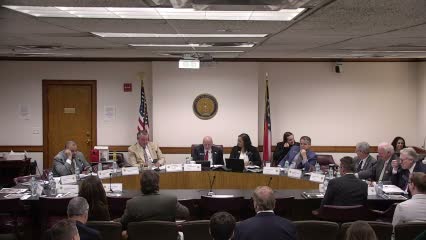
Senate committee amends and advances substitute for House Bill 14, dropping post‑production credit language
Summary
The Economic Development and Tourism Committee considered LC 590163S (House Bill 14), debated a post‑production tax credit and other sections, removed the post‑production tax credit and population‑based county language by amendment, and passed the substitute as amended.
The Senate Economic Development and Tourism Committee took up LC 590163S (the House substitute for House Bill 14), which in its initial substitute included a post‑production film tax credit, targeted uplifts for certain counties, a foreign‑adversary procurement clause, and a music office provision.
Presenters described the post‑production proposal as a restoration and modernization of a stand‑alone post‑production credit that expired in 2022. Industry witnesses, including Hany Korngold of South Georgia Studios, urged the committee to restore the credit to retain and recruit post‑production work and year‑round jobs; witnesses said post‑production can represent roughly 30% of a film’s budget and produce stable employment. Sponsors said the substitute included an uplift (an additional 5%) for projects meeting certain geographic criteria and that the bill’s draft included a $60,000,000 annual cap.
Committee members raised several concerns. One member asked whether the substitute would extend credits to user‑generated social media content; sponsors said that was not the intent and that the measure targets post‑production work such as visual effects and editing. Members also questioned a draft provision that tried to identify eligible counties by population thresholds; committee counsel recommended striking population‑based language as potentially constitutionally problematic and suggested using established rural designations or Department of Economic Development lists instead.
An amendment offered at the meeting removed the post‑production tax credit language (the amendment's strike language was described by the mover as lines 1–6 through the semicolon and 22–281). The committee put the amendment to a hands vote and the amendment passed by the committee count of 6 in favor, 4 opposed, removing the post‑production credit from the substitute. The committee later adopted a separate amendment to strike the population‑based county language and section 2. The chair then called the question on the substitute as amended and announced the substitute passed unanimously.
Other retained provisions included language creating a centralized music office within the Department of Community Affairs and a procurement provision described by a presenter as closing a loophole that would bar companies with significant investment from a foreign adversary from performing as third‑party vendors on state contracts.
What happens next: LC 590163S was reported out of committee as amended. Sponsors and counsel indicated additional refinement may follow in subsequent drafting, and fiscal and constitutional questions raised at the hearing (county eligibility language, scope of the credit) will be researched further.