Get Full Government Meeting Transcripts, Videos, & Alerts Forever!
Get email alerts on the River Access topic
No spam. Unsubscribe anytime.
Paddle Georgia coordinator urges legislature to clarify which streams are legally navigable
Summary
Joe Cook told the committee legal uncertainty about what counts as a "navigable" stream in Georgia is causing closures and hurting recreation businesses; he urged the legislature to provide clarity and cited historical case law as the basis for public passage rights.
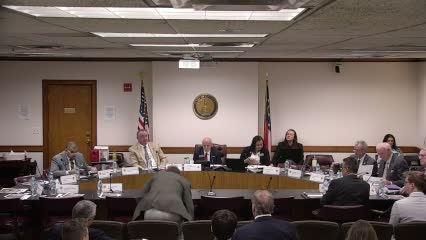
Joe Cook, identified in the record as the Paddle Georgia coordinator, told the Economic Development and Tourism Committee that longstanding uncertainty over which streams are "navigable" is shrinking public access to rivers and harming outfitters who depend on passage.
Cook traced the issue to 19th‑century state law and case law. He described Young v. Harrison (1849) as establishing public passage on streams that can float a boat and said later case law in the 1990s (the record references a Baker County case, described in testimony as Givens v. Itchaway) narrowed access by finding some historically used streams were not navigable. Cook said that narrowing has led private owners to block passage with no‑trespassing signs and that outfitters and long‑time paddlers now face uncertainty and potential criminal or civil consequences when they float downstream.
"Is it just and right for a single stream front property owner to have the authority to close down a stream to the public, including streams upon which tourism businesses, canoe and kayak outfitters depend?" Cook asked the committee. He urged lawmakers to provide stronger statutory clarity about the right to float rivers and streams and to consider how Georgia’s policy compares with neighboring states that explicitly protect recreational passage.
Several senators responded with examples of property damage and disorder left by some floaters; committee members and Cook distinguished lawful floating from trespass when people leave the water and enter private land. Committee counsel and members discussed possible statutory approaches, and senators asked staff to research out‑of‑state models and the legal differences between granting passage rights and asserting state ownership of river bottoms.
What happens next: Committee members requested follow‑up research; no formal legislative action was taken at this meeting.