Get Full Government Meeting Transcripts, Videos, & Alerts Forever!
Get email alerts on the No Photo Id topic
No spam. Unsubscribe anytime.
Senate panel advances bill allowing no-photo state IDs for religious objectors
Summary
A Senate committee advanced a bill to let Arkansans with sincerely held religious objections obtain state IDs and driver’s licenses without photos, while carving out federal REAL ID and voter-ID uses and adding affidavit and verification steps to reduce misuse.
A Senate committee advanced legislation that would allow people with sincerely held religious objections to obtain state identification cards and driver’s licenses without a photograph, proponents said.
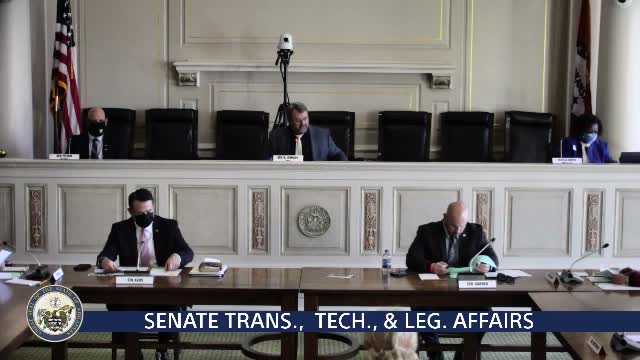
Representative Delia Hawk (District 91) told the TRANSPORTATION, TECHNOLOGY & LEGISLATIVE AFFAIRS committee the bill responds to needs voiced by Amish and Mennonite constituents in her district and nearby communities. "This bill suggests that because of their religious objection to a photo or a graven image, This would allow them along with, communities in 13 other states that have issued, driver's licenses and photo IDs without a photograph," she said.
The bill explicitly exempts federal REAL ID uses and voting: people who want a federal-compliant REAL ID or to vote would still need a photo ID, Hawk said. Committee members pressed on safeguards and practical effects: Senator English asked whether the no-photo card would substitute for federal identification used for air travel; Hawk replied applicants seeking federal ID would still have to meet federal-photo requirements.
Revenue and law-enforcement supporters told the committee the measure tightens existing practice rather than creates a new broad exemption. A revenue official identified in the transcript as "Chris McNeal" and later as "Chris McNeil" said the measure would require a signed affidavit or a specified IRS form, add the legal standard of a "sincerely held" religious belief, and create potential criminal liability for false claims. "If someone if if such an applicant were to falsely make such a statement, there would be potential criminal liability there, which is not present now," the official said.
Senators raised concerns about fraud and operational details. Senator Pietsch asked whether the statute would be so easy to use that it could be misused; proponents pointed to experience in 13 states and said fraud has been rare. Senator Hill warned broadly that "anyone can claim a religious belief," noting banks and Patriot Act identity checks often require photo identification.
Committee members also discussed implementation mechanics. Hawk said the state police recommended an in-person verification step in Little Rock as a stronger safeguard, but that proposal would be a policy of the state police and is not codified in the bill. DFA testimony indicated the phrase "advise the secretary" in current law is read to mean DFA as an agency and that revenue offices statewide could administer the process, with the bill providing clearer guidance than present practice.
The committee approved the measure on a voice vote after Senator English moved for a "new pass" and Senator Chesterfield seconded; the record shows the motion carried by voice vote but no roll-call tally was given. The committee adjourned after noting the next bill had been pulled for amendment.
The bill will proceed from the committee; additional committee or floor action, and any statutory language refinements, remain to be determined.