Get Full Government Meeting Transcripts, Videos, & Alerts Forever!
Get email alerts on the School Bus Specs topic
No spam. Unsubscribe anytime.
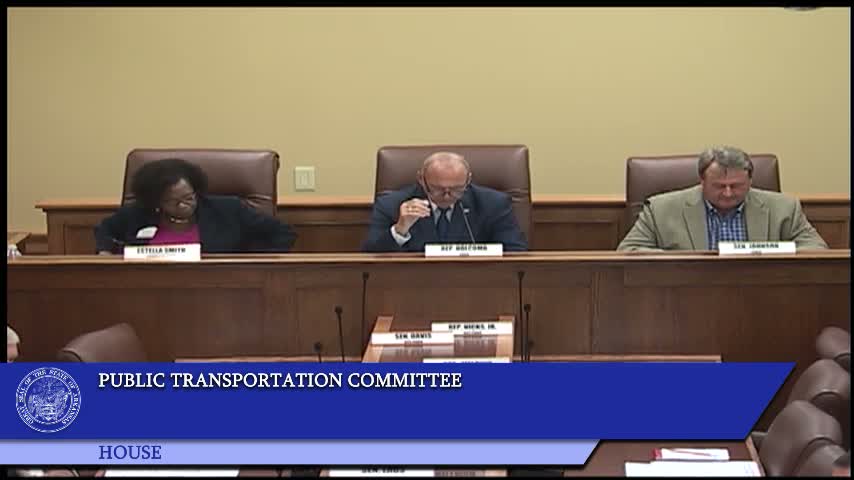
Senate committee halts school-bus brake rule update, seeks more data on costs and safety
Summary
A Senate transportation subcommittee reviewed updates to school-bus specifications that require air brakes on buses meeting a 65-passenger or 26,001-pound threshold. Lawmakers raised cost, maintenance and data gaps and voted to recommend 'do not pass' pending more information.
A Senate transportation committee on Thursday considered proposed updates to school-bus design specifications that, under current rules, require air brakes on buses with a design capacity of 65 or more passengers or with a weight over 26,001 pounds. Presenters from the Department of Education said most changes were organizational updates tied to federal safety standards and National Congress on School Transportation recommendations dating back to 2012.
The committee heard from Jennifer Dedman, an attorney for the Department of Education, and Janet Clark, public school program coordinator with the Division of Public School Academic Facilities and Transportation, who explained that the specification rules were last comprehensively updated in 02/2012 and that Act 375 of 2017 and other federal guidance prompted smaller amendments. "The changes that you see are not very many and not very large," Dedman said, adding the air-brake threshold has been in place since 02/2012.
Lawmakers pressed presenters for evidence and cost estimates. Representative Kozar questioned why air brakes were required if hydraulic brakes have performed historically and emphasized the burden on rural districts that purchase used buses. "If the bus is safe, why does it have to have air brakes?" Kozar asked, noting the expense for small, rural systems that "have to squeeze every dime." Dedman said the 2017 review committee included bus manufacturers and transportation directors and concluded that air brakes were a safety improvement because they are fail-safe.
Committee members repeatedly requested accident and failure data. Dedman said the department does not keep state-level records tying specific incidents to hydraulic-brake failures and has sought information from national data-gathering entities and the U.S. Department of Transportation. "I did reach out to the national, data gathering groups," she said, adding she had not received all data by the meeting.
Operational concerns also surfaced: legislators cited long rural routes, dirt roads and maintenance questions including whether air lines can crystallize in dusty conditions, and they warned that air-brake-equipped buses typically require drivers with a Class B commercial license, which can affect driver recruitment and retention. Presenters said manufacturers (including Bluebird) were part of the stakeholder review but could not confirm localized maintenance anecdotes without further inquiry.
After discussion about cost implications and outstanding data requests, a committee member moved that the rule "do not pass" pending the submission of additional information; the motion was seconded and approved by voice vote with no recorded opposition. The committee also noted that existing buses would be grandfathered and that the requirement would apply to new purchases above the stated thresholds going forward.
The committee asked staff to gather cost comparisons between new buses with hydraulic brakes and those with air brakes, to seek state-specific incident data from law enforcement or national repositories, and to estimate any statewide fiscal impact per pupil. The rule will not advance from the committee until that follow-up information is provided.