Get Full Government Meeting Transcripts, Videos, & Alerts Forever!
Get email alerts on the Speed Limits topic
No spam. Unsubscribe anytime.
Senate committee advances bill to raise maximum speed limit to 75 mph after safety debate
Summary
After testimony from the Arkansas Trucking Association, Arkansas State Police and the Arkansas Department of Transportation citing crash and fatality data, the Senate Transportation committee passed a bill to raise the maximum speed limit to 75 mph as amended.
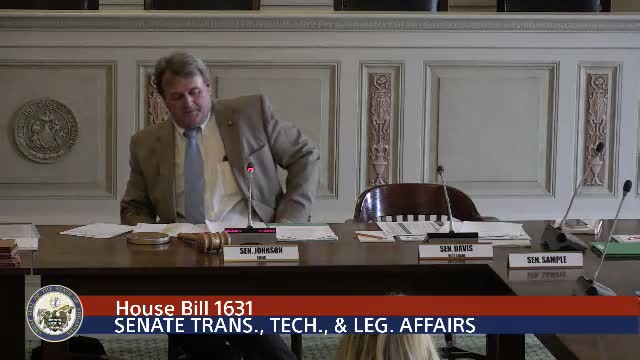
The Senate Transportation, Technology and Legislative Affairs Committee voted to advance a bill that would allow a maximum speed limit of 75 miles per hour after extended testimony from industry and public-safety witnesses who urged caution.
Sponsor (unnamed in the transcript) told the committee the bill would "simply raise the speed limit to 75 miles an hour" and moved it forward after debate. The committee heard opposition testimony from David O'Neil of the Arkansas Trucking Association and Major Forrest Marks of the Arkansas State Police, and an engineering and safety review was presented by Scott Bennett, director of the Arkansas Department of Transportation.
David O'Neil told the committee that he opposed increasing speed limits and cited interstate fatality-rate comparisons, saying there are "21 states with a speed limit of 70 miles per hour that have a fatality rate per 100,000,000 miles of 1.19" while "15 states at 75 miles per hour ... their fatality rate is 1.32 on average" and that "Arkansas has the fifth highest fatality rate in the nation with a rate of 1.52 deaths per 100,000,000 miles, and that's around 480 deaths in the last calendar year." O'Neil said raising speed limits leads to more vehicles exceeding new limits, increases property-damage claims and raises insurance costs.
Major Forrest Marks, with the Arkansas State Police, opposed the bill for safety reasons and cited state crash figures and stopping-distance analyses, saying higher speeds translate into longer stopping distances and that enforcement practices often create a carriage-way speed buffer of 5 to 10 mph. "If you push it up to 75, then a lot of people will be doing 80 85," Marks said.
Scott Bennett said the Arkansas Department of Transportation had previously been authorized to set a maximum of 75 mph but that any change should follow an engineering and safety review. He reported the department's review of other states' experiences and said fatalities rose after speed-limit increases in several states — "in Texas rose, about 13 percent after they raised their speed limit," and higher increases in some states — and noted the commission had not acted because of safety concerns.
After questioning and closing remarks from the sponsor — who said many drivers already travel at the higher speed and described the bill as invoking "the will of the people" — the sponsor moved that the bill "do pass as amended;" Senator Hill seconded; a voice vote followed and the chair stated, "You passed it." The transcript records a voice vote but does not include a roll-call tally.
The committee advanced the measure to the next stage of the legislative process.