Get Full Government Meeting Transcripts, Videos, & Alerts Forever!
Get email alerts on the School Transportation topic
No spam. Unsubscribe anytime.
Committee approves permissive bill allowing schools to offer push-to-talk devices for bus drivers
Summary
A permissive bill that would allow, but not require, school districts to offer push-to-talk apps or devices to bus drivers cleared the Senate Transportation committee after a presentation about hands-free, one-to-one communications options and a voice vote.
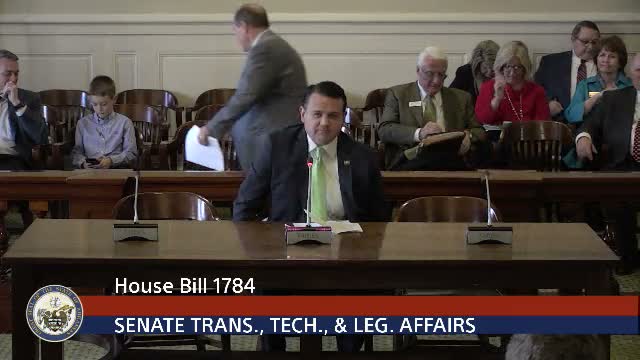
The Senate Transportation, Technology and Legislative Affairs Committee approved a permissive bill that would allow school districts to offer bus drivers a push-to-talk communication option in addition to traditional two-way radios.
An unidentified senator told the panel the bill would let districts choose to provide a device or app that offers a direct communication line to central dispatch or transportation headquarters and reduces background traffic heard on conventional radios. “This is an additional option that allows them to have a direct line of communication back to the ... Central dispatch or the transportation headquarters,” the presenter said, and described hands-free and lapel or handheld push-to-talk solutions.
The presenter listed several commercial examples in the transcript (AT&T, Verizon, Voxer, Zello and device vendors such as Motorola, Apple, Kyocera and Samsung) as possible providers; the bill does not require districts to adopt a particular provider.
There were no members of the public signed to testify for or against. A committee member moved the bill, it was seconded (Senator Davis was recorded as the second), and the committee approved it by voice vote.
The measure is permissive — it authorizes but does not require school districts to adopt the technology — and will proceed in the legislative process.