Get Full Government Meeting Transcripts, Videos, & Alerts Forever!
Get email alerts on the Autonomous Vehicles Pilot topic
No spam. Unsubscribe anytime.
Senate panel advances bill to allow limited autonomous commercial vehicle pilots in Arkansas
Summary
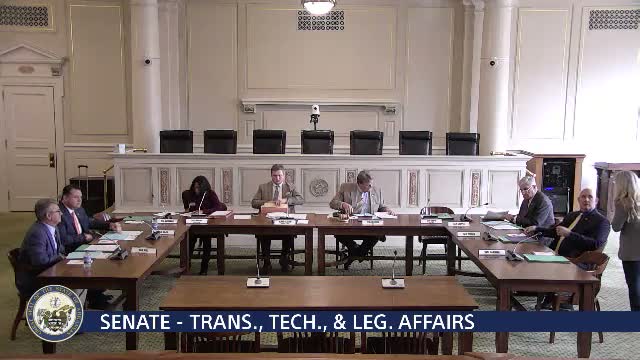
The Senate Transportation committee advanced House Bill 15‑61, which would let companies run limited level‑4 autonomous vehicle pilots in Arkansas after submitting operational and safety plans to the state highway department; retail and rail stakeholders urged safety guardrails and collaboration.
The Senate Transportation, Technology & Legislative Affairs committee voted to advance House Bill 15‑61, a sponsor said, to allow companies to operate limited pilot programs testing driver‑assisted and driverless (level‑4) commercial autonomous vehicles on Arkansas streets and highways.
Senator Pitch, the bill’s sponsor, told the committee the measure is narrowly focused on pilots. “I stress the word pilot program,” he said, describing requirements that companies submit an operational and safety plan to the Arkansas Department of Transportation (RDOT/Highway Department) and noting that a company approved under the pilot could operate up to three autonomous vehicles at one time. Pitch argued the bill would help bring technology jobs and investment to Arkansas and cited that about 29 states have enacted related laws.
The committee heard from two industry witnesses. Michael Lindsey, director of public affairs for Walmart, said Walmart wants to run small‑scale tests tied to store operations to evaluate efficiency and operating costs before considering larger consumer delivery programs. “We do want to test it out, see how efficient it is, see what the costs are and its operational and maintenance costs are,” Lindsey said.
Michael Garraga, executive director of government affairs for BNSF Railway, supported innovation but urged the committee to add language addressing how autonomous vehicles will interact with highway‑rail grade crossings. Garraga cited a Federal Railroad Administration report on automated vehicles and grade crossings and said stakeholder coordination is needed so AVs interface safely with crossing signal systems. “The rail industry places safety at the highest priority as part of our culture. It’s in our DNA,” Garraga said, and he asked the committee to consider an amendment to integrate rail‑safety considerations into the pilot program.
Sponsor and freight representatives discussed timing and notice: Garraga said the rail industry had not submitted amendment language to the House and had learned the bill moved quickly; he offered to work with the sponsor and other stakeholders on amendment language. Senator Pitch said he had spoken with the Railroad Association, which he said indicated it was “okay with 15 61,” and reiterated the bill’s focus on level‑4 systems designed to perform comparably to human drivers in interacting with traffic and crossings.
After debate and the witness presentations, the committee moved the bill forward. A motion to pass was made by Senator Due, seconded by Senator Eads, and the committee advanced House Bill 15‑61 by voice vote.
What’s next The committee advanced the bill; the transcript records a committee voice vote in favor. The record shows industry agreement to continue stakeholder work on rail‑crossing interactions, but no formal amendment addressing crossings was adopted during this meeting.