Get Full Government Meeting Transcripts, Videos, & Alerts Forever!
Get email alerts on the Blockchain topic
No spam. Unsubscribe anytime.
Senate committee advances bill recognizing blockchain contracts and smart contracts
Summary
The Senate committee voted to pass House Bill 19 44, which clarifies that blockchain-based "smart contracts" are legitimate and establishes a statutory framework to support blockchain use cases such as food-traceability and identity services, with proponents arguing it will attract businesses and workforce investment to Arkansas.
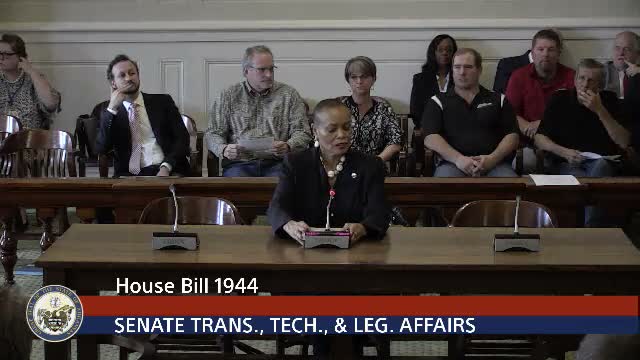
A Senate committee on Thursday moved House Bill 19 44 forward after presentations from technology proponents who said the measure would give legal clarity to automated contracts executed on blockchain platforms.
Unidentified sponsor introducing the bill told the committee the measure would help Arkansas "keep moving forward" with blockchain technology and that it would reduce reliance on middlemen by enabling direct, secure transactions between parties.
Marla Johnson, partner at Blockchain Ready Studio, described blockchain as an operating system that allows secure sharing of information in "blocks of content." She highlighted food-supply traceability as a leading use case, saying the technology can help isolate instances of E. coli or salmonella in the supply chain. "This technology is already being used extensively here in Arkansas," Johnson said, naming local adopters and noting the governor hosted a recent blockchain summit.
Ken Hubbell of Blockchain Ready Studio said the bill would help build workforce pathways and policy scaffolding. He pointed to university and community-college programs and noted other states have begun putting legal frameworks in place for smart contracts. Hubbell said the bill’s smart-contract language would serve as a signal that Arkansas is "open for blockchain business."
Committee members asked whether the statute would affect existing, automated agreements. Presenters said the measure is analogous to laws on electronic signatures: it affirms that an automated or computer-executed smart contract should not be dismissed solely because it was automated. They also said the bill’s start date means it will not retroactively invalidate past contracts.
The committee passed the bill by voice vote. The motion to pass was offered by Senator Eads and seconded by Senator Pitch.
The bill will next move through the legislative process according to regular scheduling and referral procedures; no roll-call tally was recorded in committee minutes.