Get Full Government Meeting Transcripts, Videos, & Alerts Forever!
Get email alerts on the Speed Trap Law topic
No spam. Unsubscribe anytime.
Committee advances bill clarifying 'speed-trap' calculations and requiring auditors to flag possible abuses
Summary
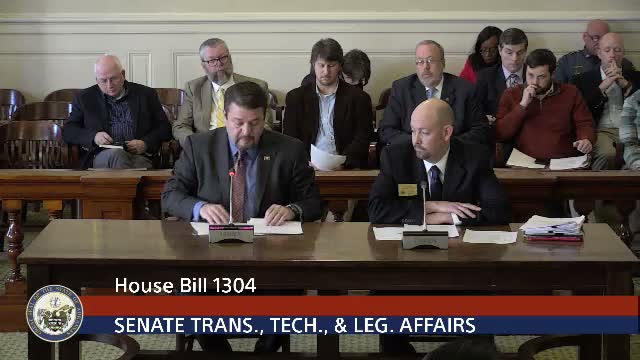
House Bill 1304 expands the state's speed-trap law to include cities of the first class, defines revenue for the 30% threshold so ancillary expenditures are excluded, and requires auditors to check for potential noncompliance; the committee passed the bill after sponsor and Legislative Audit testimony and clarifying questions.
Senator Raiford presented House Bill 1304 to the committee as a three-part fix to ambiguities in the state's "speed-trap" law. "It expands the scope of the speed trap law to include cities of the first class," he said, and told members the bill also clarifies how the 30% revenue threshold should be calculated by excluding ancillary municipal expenditures.
Kevin White, assistant legal counsel with Legislative Audit, said auditors had previously calculated the 30% threshold three different ways in investigations and that the bill gives auditors the specificity they need. "We're trying to provide clarity to the law," White said, citing past cases such as incidents in Damascus and other municipalities where differing calculations complicated enforcement.
Senator Pitch (as identified in the transcript) asked whether punitive consequences follow an audit that shows a municipality over the threshold and whether temporary events such as a festival might cause a one-time spike. Kevin White replied the auditors's role is to identify potential noncompliance in reports; referral to prosecutors and any subsequent law-enforcement investigation would follow existing procedures. He said auditors will refer unresolved matters to prosecutors, who may request Arkansas State Police investigations and then use their discretion on enforcement.
No public witnesses signed up to speak for or against the bill. Senator Davis moved to pass HB 1304 and Senator Hill seconded; the committee approved the bill by voice vote.
The bill adds a mandated auditing inquiry into affected municipalities for potential abuse of police power and aims to deter practices that rely on traffic enforcement for disproportionate revenue.
Next steps: the bill advances from committee according to the legislative calendar.