Get Full Government Meeting Transcripts, Videos, & Alerts Forever!
Get email alerts on the School Bus Safety topic
No spam. Unsubscribe anytime.
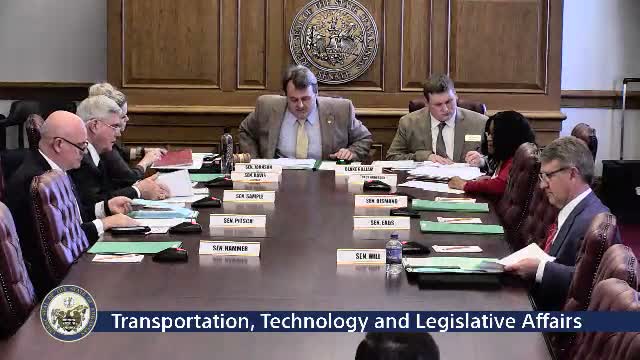
Committee advances bill to toughen penalties for illegally passing stopped school buses
Summary
A Senate committee advanced a bill that raises fines for drivers who illegally pass stopped school buses and creates a higher offense — a class A misdemeanor — when conduct shows a reckless disregard for passenger safety, based on multi‑year sampling presented by schools.
A Senate committee voted to advance a bill that increases penalties for drivers who illegally pass stopped school buses, the committee heard. The presenter, citing sampling by Cedarville schools and the state facilities division, said the data show recurring, one‑day samples across multiple years with hundreds of incidents.
The presenter told the committee that the proposed law raises the baseline fine for passing a stopped school bus to a minimum of $500 and a maximum of $2,000. "If you do it in a way that you're demonstrating a reckless disregard for the safety of the passengers, then it's actually a class A misdemeanor," the presenter said.
Committee members asked how the sampling was done and whether the one‑day surveys represented an isolated snapshot. The presenter said the samples were repeated in 2014, 2015, 2016 and 2017, with example counts the presenter gave (2014: 16 schools, 607 incidents; 2015: 15 schools, 546 incidents; 2016: about 108 schools, ~706 incidents; 2017: 103 schools, 726 incidents). The presenter identified the data source as the Division of Public School Academic Facilities and Transportation.
Members also questioned enforcement mechanics. Committee members were told the bill, as drafted, applies when law enforcement officers personally observe the violation; bus camera footage could be used as evidence but introduces legal complications, including proving who was driving the vehicle. The presenter said cameras strengthen a case but cautioned that proving the identity of the driver and meeting evidentiary standards can lead to litigation.
The committee approved the measure by voice vote after a motion to advance the bill.
The next procedural step is committee transmittal; the bill was advanced to the next stage by voice vote and without a roll‑call tally recorded in the hearing transcript.