Get Full Government Meeting Transcripts, Videos, & Alerts Forever!
Get email alerts on the Reconnect Program topic
No spam. Unsubscribe anytime.
USDA outlines $600 million ReConnect opportunity and other federal tools to expand rural broadband in Arkansas
Summary
USDA Rural Development officials briefed Arkansas lawmakers on four federal broadband programs, led by the new ReConnect funding window with $600 million nationwide. Officials urged local-state partnerships, described eligibility and matching rules, and pointed to webinars and a mapping tool to help providers apply.
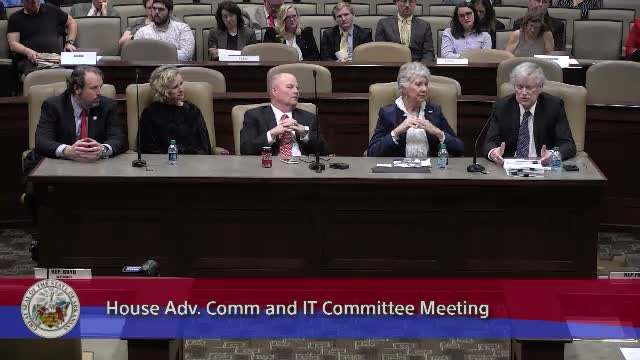
USDA Rural Development officials told an Arkansas legislative panel that a rare window of federal funding could speed broadband to hard‑to‑serve rural areas — but communities and local providers must act quickly and coordinate closely to qualify.
"There's $600,000,000 been announced in this program," Bill Voigt, USDA general field representative, said of the ReConnect program, which he described as three separate funding tracks: a grant‑only pool ($200 million), a 50/50 grant‑loan mix ($200 million) and a low‑interest loan pool ($200 million). Voigt said each track has different eligibility thresholds and rules, including cash‑match requirements for grant awards.
Why it matters: ReConnect and other USDA programs target last‑mile gaps that private markets often leave unserved. Panelists said successful applications typically pair technical planning with state or regional partnerships and local commitments to take rates.
USDA officials reviewed four main federal tools: a long‑standing telecommunications loan program for rural independent telephone companies; a Farm Bill broadband program that allows limited competition in an applicant’s service area; the Community Connect grant for contiguous unserved areas (current minimum standard 10 Mbps down/1 Mbps up for eligibility); and the new ReConnect funding window.
Voigt explained key ReConnect details: the grant track requires a 25% cash match ("if you apply for a grant of a hundred dollars... you have to provide $25"), the 50/50 grant‑loan track requires that 90 percent of households in the proposed area lack adequate service, and the low‑interest loan track is first‑come, first‑served with a fixed roughly 2 percent interest rate for the life of the loan depending on equipment useful life. He also said satellite and cellular service do not count as meeting the 10/1 unserved baseline for many program calculations.
Panelists emphasized application planning and verification. "You cannot draw in those forbidden areas," Voigt said describing ReConnect’s mapping tool at reconnect.usda.gov that prevents applicants from including territories already served by prior federal funding. USDA general field representatives will help verify service on the ground, Voigt said, and the agency plans webinars and regional workshops on application preparation.
USDA staff urged local leaders to form advisory committees, identify partner organizations (electric co‑ops, independent telcos, water utilities or hospitals), and consider co‑locating conduit when doing construction projects. "When you dig a water line... lay that conduit," Heather Legg, state director (Kentucky), said as an example of lowering future costs.
Next steps: USDA listed two upcoming webinars (including one with times noted in eastern time on the ReConnect site) and said application guidance and an online tool will be posted at reconnect.usda.gov. Officials left one‑page program bullet sheets for lawmakers and offered direct contact with field representatives to assist potential applicants.
The meeting concluded with legislators and USDA staff agreeing to pursue state‑level coordination and outreach so Arkansas communities and providers can submit competitive applications before program deadlines.