Get Full Government Meeting Transcripts, Videos, & Alerts Forever!
Get email alerts on the Distracted Driving topic
No spam. Unsubscribe anytime.
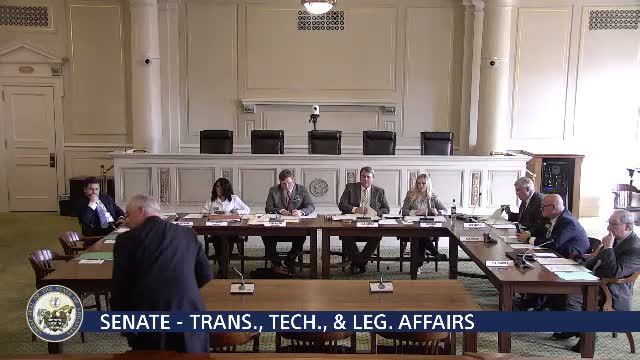
Senate debate flags enforcement challenges for bill to make phone use a primary offense for 18-year-old drivers
Summary
Senate Bill 208, introduced by Senator Bond, would make certain handheld phone use by 18-year-olds a primary offense. Committee members questioned enforceability and interactions with other distracted-driving provisions; sponsors suggested coordinating related bills and reviewing a statutory cross-reference cited in the transcript.
Senator Bond introduced Senate Bill 208 and said the bill would make specified handheld-phone use by 18-year-old drivers a primary offense so officers could stop a vehicle for the behavior. "All this bill does is say you can be pulled over for it if you're 18 and you're using your phone, a handheld phone," Bond said.
Committee members expressed concerns about enforcement, age estimation and overlap with other distracted-driving measures. Senator Desmigne asked whether the change applied only to 18-year-olds; Bond said discussions continue about whether to extend the approach to drivers through age 21. Several senators noted other pending bills that treat school zones or 18–21 age ranges differently.
Members also flagged a potential statutory interaction. The sponsor pointed to a provision cited in the transcript as "27 51 16 o 3" that appears to limit when officers may stop or detain drivers; sponsors said they would review cross references and consider pulling the bill to coordinate language so the measures do not conflict. Representatives of highway or enforcement interests were present but the transcript records only discussion of enforcement trade-offs, not an expressed formal position.
No vote on SB 208 was recorded in the transcript; senators agreed to coordinate related bills and revisit enforcement language and cross references in subsequent committee work.