Get Full Government Meeting Transcripts, Videos, & Alerts Forever!
Get email alerts on the Bicycle Policy topic
No spam. Unsubscribe anytime.
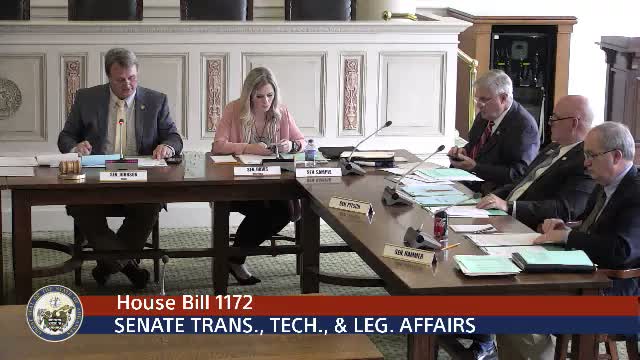
Committee rejects ‘Idaho-style’ bicycle stop law after safety debate
Summary
A proposal to let bicyclists treat stop signs as yields and certain red lights as stop signs (modeled on an Idaho law) failed on a committee voice vote after members raised safety and driver-expectation concerns; supporters cited an Idaho reduction in bicycle fatalities and economic benefits from cycling tourism.
Senate Bill 388, introduced with backing from the Governor’s Advisory Council on Cycling, failed in committee after a lengthy debate over safety and driver expectations.
Joe Jacobs, chair of the Governor’s Advisory Council on Cycling and staff at the Arkansas Department of Parks and Tourism, told members the council formed to improve cycling safety and tourism and that the bill is modeled on an Idaho law enacted in 1982. Jacobs said that in Idaho the year after enactment bicycle-related fatalities dropped by 14.5 percent and that 17 other states have similar provisions. He and other presenters said the bill would not change right-of-way rules and argued it can improve traffic flow and safety for cyclists.
Several senators pushed back. Members said drivers might not expect bicyclists to proceed at red lights or through stops, questioned enforcement and liability implications, and argued that allowing bicyclists to proceed could increase crash risk because bicycles are smaller and less visible. Supporters reiterated that cyclists must exercise judgment, that the measure treats a red light as a stop (including a requirement to stop at a lighted intersection at some point), and that advisory-council membership includes cycling advocates, local business leaders and agency representatives.
After debate, the committee took a voice vote; the motion failed and the bill did not advance.