Get Full Government Meeting Transcripts, Videos, & Alerts Forever!
Get email alerts on the Reinstatement Fees topic
No spam. Unsubscribe anytime.
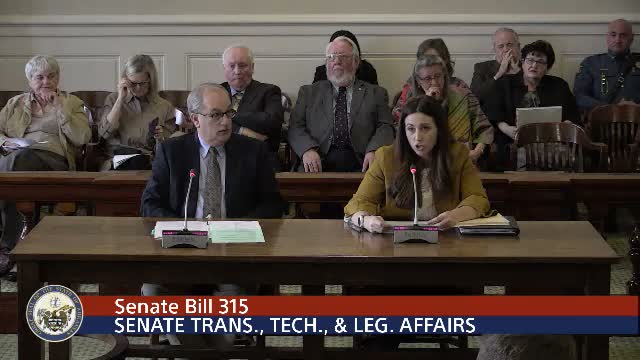
Committee advances plan to intercept tax refunds for unpaid reinstatement fees
Summary
A Senate committee advanced legislation allowing DFNA to intercept state tax refunds to collect court-assessed reinstatement fees (estimated outstanding balance cited at about $57.7 million); sponsors said notice and court-challenge opportunities will be provided and revenue allocation would be set through appropriations.
A Senate committee voted to advance a bill that would let the Department of Finance and Administration (DFNA) capture state tax refunds to collect unpaid driver reinstatement fees that courts already assessed.
DFNA told the committee the outstanding balance on reinstatement fees is ‘‘approximately 57,700,000.0,’’ and described a process in which DFNA would send a November letter notifying people their refunds could be intercepted and giving them an opportunity to pay or contest the fee with the court or DFNA. A DFNA presenter said the fees are first assessed by the court when a license is suspended for DWI, failure to pay or failure to appear.
Sponsor remarks emphasized that the bill does not create new charges, only a mechanism to collect amounts already owed. The sponsor noted the law previously ran with a sunset clause to measure effects and that tracking was limited until recent system changes; when the measure ran earlier, the one-year collection total was $2,500,000.
Senator Pitch asked where any additional revenue would be appropriated; DFNA and the sponsor replied that large sums would enter the appropriation process rather than automatically being assigned to the state police. The sponsor said prior distributions of fees include shares to the state police, operating funds and retirement, and that some DWI-related fees are split among public-health and driver-services accounts.
A motion to pass the bill was made, seconded and carried on a committee voice vote.