Get Full Government Meeting Transcripts, Videos, & Alerts Forever!
Get email alerts on the Labor Law Child Labor topic
No spam. Unsubscribe anytime.
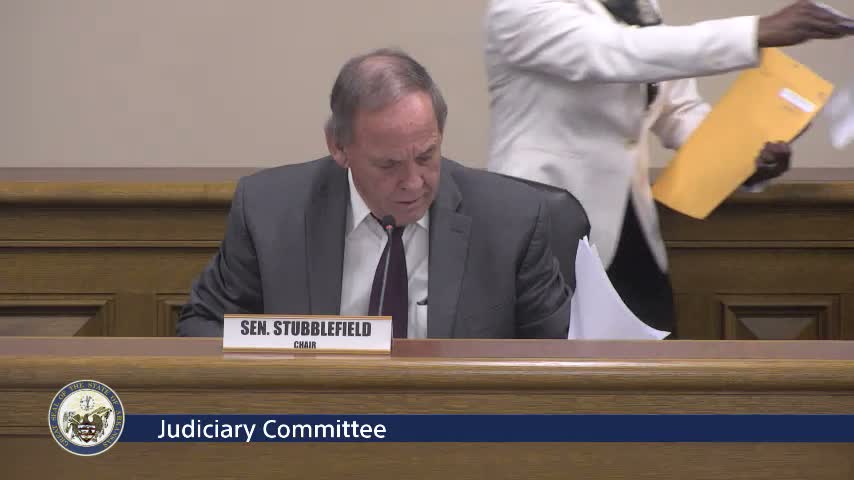
Committee approves amendment to make employers criminally liable for knowing child-labor violations
Summary
Senators adopted an amendment to SB390 that narrows the language to hold 'employers' who 'knowingly' violate child-labor laws criminally liable; the bill creates misdemeanor penalties on initial offenses and raised penalties for subsequent violations, and passed the committee as amended.
The Senate Judiciary Committee adopted and passed an amendment to SB390 to simplify the culpability language and focus criminal liability on employers who knowingly violate child-labor statutes.
Senator Tucker and co-sponsors explained the amendment replaces a long enumerated list (person, firm, corporation, partnership, parent, guardian, custodian) with the single term 'employer' and adds the mental state 'knowingly,' while adopting an existing statutory definition of 'employer' that includes agents and managers. The sponsor said the change makes it feasible for prosecutors to bring individual criminal charges rather than taxing enforcement by trying to treat corporations directly as criminal actors.
Under the bill as described in committee, a first offense would be a class C misdemeanor and subsequent offenses would be class B misdemeanors; sponsors said the language was cleaned up following prior testimony. Senator Tucker said the amendment and bill reflect prior committee testimony and stakeholders' input; the committee adopted the amendment and approved the bill as amended by voice vote.
Committee members who supported the change said it provides a practical enforcement path for prosecutors while critics asked clarifying questions about definitions and overlap with existing enforcement tools. The measure will advance to the full Senate.