Lifetime Citizen Portal Access — AI Briefings, Alerts & Unlimited Follows
Senate Judiciary Committee approves misdemeanor for entering public changing facilities when minors present
Loading...
Summary
The Senate Judiciary Committee passed SB 270, creating a class C misdemeanor for knowingly entering a public changing facility and remaining there when a minor of the opposite sex is present. Prosecutors warned proving sex assigned at birth could require subpoenas or medical records; civil-rights advocates said the law would target transgender people.
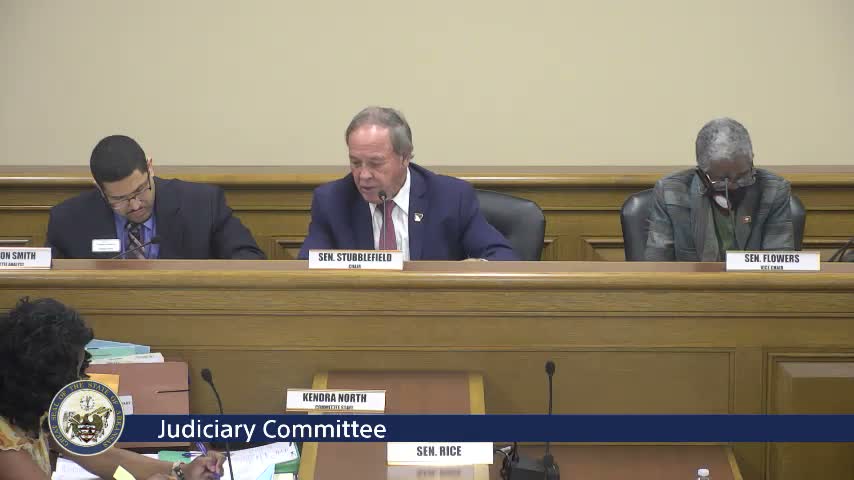
The Senate Judiciary Committee on Wednesday approved SB 270, a bill that would make it a class C misdemeanor to knowingly enter and remain in a public changing facility when a minor of the opposite sex is present.
Sponsor Senator Peyton described the measure as a narrow compromise focused on protecting children and said it "would only create a misdemeanor offense." He urged committee members for a favorable vote.
Prosecutor Bob McMahon, testifying for the Prosecuting Attorneys Association, warned that the way the bill is written makes a person’s anatomy at birth an element prosecutors would have to prove. "We would have that burden of proof," McMahon said, adding that prosecutors might seek a search warrant, subpoena medical records or use blood testing to try to establish that fact.
Opponents argued the bill would effectively target transgender people and could chill ordinary restroom use. Pastor Clint Schneckloth, who said he had driven six hours to testify, told lawmakers: "Would you please let my people pee?" Blake Tierney, a child services professional, said the bill’s rhetoric contradicted other legislative actions and urged rejection.
Committee members pressed for clarity on key terms used in the bill. Senators asked how the undefined term "remain" would be applied in practice; McMahon said charging decisions would depend on facts of each case and prosecutorial discretion. Members also discussed whether the statute would apply to privately owned facilities "held out as open to the public," and witnesses and staff pointed to language in the bill that treats such facilities as public for the statute’s purposes.
After discussion and public comment, the committee took a motion and passed SB 270. One committee member voiced opposition during the roll call, and sponsors acknowledged prosecutions under the measure would likely be rare and challenging to bring.
The bill will move on from committee with the committee’s approval; additional floor action and possible judicial review remain potential next steps.