Get Full Government Meeting Transcripts, Videos, & Alerts Forever!
Get email alerts on the Sb199 topic
No spam. Unsubscribe anytime.
Senate Judiciary Committee advances SB 199, a private malpractice cause for gender‑related care for minors
Summary
The Senate Judiciary Committee advanced SB 199 after two hours of testimony. The bill would create a private civil cause of action and extend statutes of limitation for certain gender‑related medical treatments for minors; medical experts and advocates sharply disputed the need and likely effects.
Little Rock — The Senate Judiciary Committee voted by voice to advance Senate Bill 199 after more than two hours of testimony from physicians, researchers, advocates and parents about whether the measure would protect children or unduly restrict medical practice.
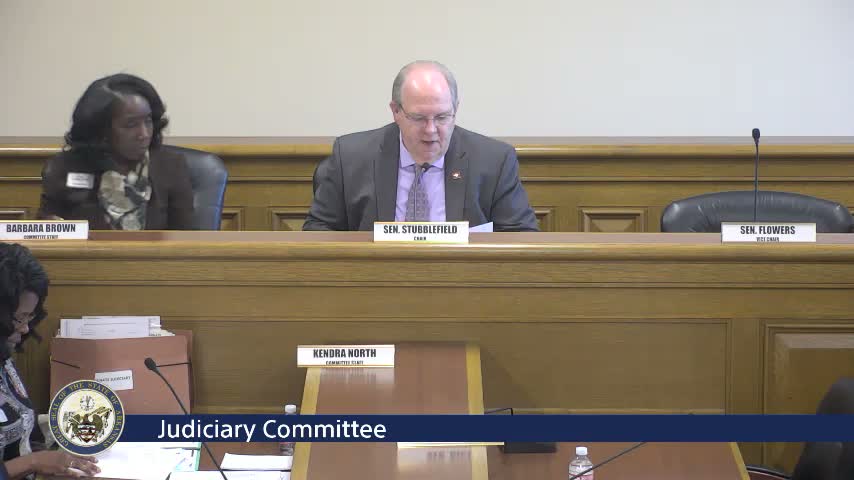
Senator Stubblefield, sponsor of SB 199, told the committee the bill creates a private malpractice cause of action so children ‘‘who have undergone physical, medical gender treatments as minors should be able to sue doctors and hospitals that perform the treatment.’’ He framed the measure as a child‑protection and accountability tool and described what he called irreversible harms from some interventions.
Opponents — including clinicians who treat gender‑dysphoric youth and civil‑liberties advocates — disputed the premise that the bill is needed. Dr. Janet Cathy, an OB‑GYN who said she founded the gender clinic at UAMS, told the committee: "I think that this bill addresses a very specific medical condition as it applies to minors, and I think it does set a standard of care for the treatment of the condition." She and other clinicians warned that defining medical practice in statute could substitute legal rules for professional standards.
Several witnesses said the state already has malpractice remedies and urged narrowly tailored changes to statutes of limitation rather than a statute specific to transgender care. Sarah Everett, policy director for the ACLU of Arkansas, recommended amending existing code—"You can expand the statute of limitations for all malpractice claims for minors," she said—rather than singling out transgender minors.
Patients and providers who opposed SB 199 said the bill would create barriers to care and harm mental health. Dr. Gwendolyn Paige Herzig, a Little Rock pharmacist who identified herself as a transgender woman, said she had "not experienced a single instance of a patient regretting their transition or starting puberty blocking medication" and urged the committee to reject the bill.
Supporters cited foreign follow‑up studies and argued existing malpractice statutes leave injured minors without redress. Toni Rose, testifying for An American Speaks, cited long‑term Swedish research and said it shows higher mortality and psychiatric morbidity among some post‑surgical populations, urging intervention where there is potential harm.
Committee members pressed witnesses on several legal and clinical issues: whether the bill establishes a statutory ‘‘standard of care’’ or merely creates a cause of action; why the statute of limitations would extend to decades in some cases; and whether private enforcement of constitutional questions could raise separation‑of‑powers or federal constitutional concerns. Senator Tucker repeatedly asked witnesses to explain why the committee should create a statute instead of relying on courts and medical experts to determine negligence.
The committee adopted an earlier procedure motion to limit public testimony to two minutes per speaker. After closing remarks by the sponsor, senators offered floor statements on both sides of the question and the committee reported the bill out by voice vote; no roll‑call tally was recorded in the hearing transcript.
Next steps: The committee voted to advance SB 199; the transcript does not record any calendar assignment or an exact next hearing date. The committee adjourned at the end of the session.