Get Full Government Meeting Transcripts, Videos, & Alerts Forever!
Get email alerts on the Hb1943 topic
No spam. Unsubscribe anytime.
Committee Hears H.B. 1943, a Proposal to Reduce Penalty for Self‑Made Fake IDs; Members Ask How to Distinguish Commercial Manufacture
Summary
The Judiciary Committee heard H.B. 1943, which would lower the offense for producing or altering one’s own fake ID to obtain alcohol from a class C felony to a class A misdemeanor; members raised questions about proving intent and distinguishing sales from self-use.
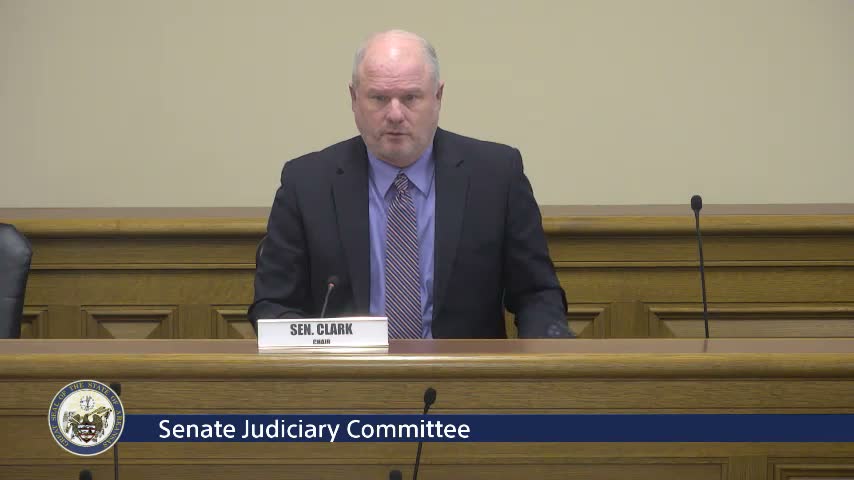
The Judiciary Committee — Senate heard a presentation on House Bill 19 43, which would reduce the criminal classification for producing or altering one’s own fraudulent personal identification to obtain alcohol from a class C felony to a class A misdemeanor.
Unidentified Speaker 3 (the presenter) said the change is intended to align state law with federal law and to reflect that many offenders in these cases are teenagers, who receive the harsher class C felony current treatment. "We're charging teenagers with a class C felony for making a fake ID for themselves, which seems a bit excessive," said Unidentified Speaker 3 when summarizing the bill’s rationale.
Committee members questioned how the law would distinguish between someone manufacturing IDs for sale (still a class C felony under the bill as described) and someone who produces or alters an ID for personal use. One member asked whether the bill’s language should include the word "fraudulently" to make intent clearer; the presenter and other members discussed that the statute already uses terms such as "manufacture" and "alter" and that fraud or criminal intent is implied in the text as written.
Members agreed not to take a formal vote on H.B. 1943 in committee while the House copy of the bill had not yet been made available to the committee; the transcript records a plan to sign the bill out later when the official text is received rather than vote now.
The committee then adjourned for the day.