Get Full Government Meeting Transcripts, Videos, & Alerts Forever!
Get email alerts on the First Responder Protections topic
No spam. Unsubscribe anytime.
Committee approves bill expanding offenses and penalties for assaults on first responders
Summary
The Judiciary Committee approved House Bill 15‑08, which defines ‘first responder’ and creates new criminal provisions — including a class A misdemeanor for knowingly transferring bodily fluids to a responder and a felony for aggravated assault causing serious physical injury — with sponsors saying the measure aims to protect personnel who respond to emergencies.
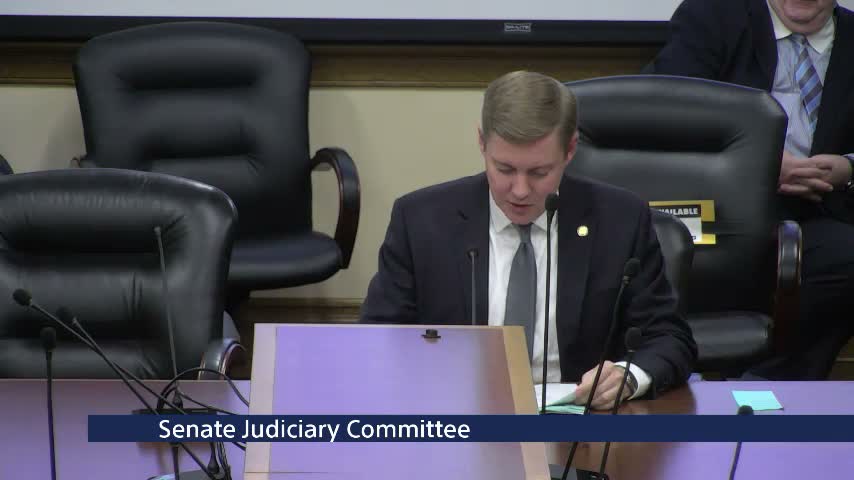
The Senate Judiciary Committee advanced House Bill 15‑08, a measure to create and strengthen criminal penalties for assaults on first responders.
The bill adds a statutory definition of “first responder” to include law‑enforcement officers, firefighters, emergency medical providers, emergency management officials and others acting within the scope of employment. It expands third‑degree battery to include knowingly causing physical contact with a first responder by spitting, throwing, or otherwise transferring bodily fluids, pathogens or human waste; the sponsor described that conduct as a class A misdemeanor carrying a $2,500 fine and a mandatory minimum sentence of 30 days in jail. The bill also creates aggravated‑assault offenses against first responders when the physical contact results in “serious physical injury” — examples the sponsor gave include protracted disfigurement, broken bones and scarring — and lists throwing dangerous objects (bricks, bottles, projectiles) and use of chemical agents among covered conduct.
Sponsor presentation emphasized protecting responders and noted the felony provision requires serious injury; committee members asked no substantive follow‑up questions in the transcript and the committee passed the bill by voice vote.
Next steps: the bill was reported out of committee and is eligible for floor consideration. The transcript records the sponsor’s descriptions and the chair’s announcement of passage; no roll‑call vote totals or fiscal figures were recorded in the hearing transcript.