Get Full Government Meeting Transcripts, Videos, & Alerts Forever!
Get email alerts on the Sexual Assault Law Amendment topic
No spam. Unsubscribe anytime.
Panel debates adding 'asleep' to sexual‑assault law; bill fails to advance
Summary
Representative Mark Lowry's HB 1896 would have added 'asleep' to the list of states in which a person cannot consent to sexual activity. Survivors and volunteers urged closing a perceived loophole; public defenders and some senators warned the language could criminalize commonplace, private conduct and urged narrower drafting. The committee took no action.
Little Rock — The Senate Judiciary Committee considered House Bill 1896, a measure to add "asleep" to Arkansas's list of states in which a person cannot consent to sexual activity, but the panel declined to advance the bill after an extensive hearing that exposed sharp disagreements over scope and proof.
Representative Mark Lowry introduced the bill and called Erin Clement to the table. Clement described being "startled awake by my now ex‑boyfriend fondling me inappropriately," and said police told her the case fell into a gray area of Arkansas law. "They were powerless to stop it," she told the committee, arguing the bill would give law enforcement and prosecutors clearer authority.
Supporters said the change would align state law with federal guidance and close a loophole that some victims say allows nonconsensual acts while a person is asleep to go unpunished. "By passing HB 1896, Arkansas will add being asleep to that list and protect the state's husbands, wives, boyfriends, girlfriends, sons, and daughters from being assaulted while they sleep," Clement said.
Defense advocates and some lawmakers raised objections. Greg Parrish, executive director of the Arkansas Public Defender Commission, warned that the wording could lead to prosecutions based on minimal or inadvertent contact and said innocent people could be arrested in the absence of clear physical evidence. "Even an inadvertent act could be construed as a violation of this offense," Parrish told the committee, and he said the practical effect could be criminal charges in cases that are merely he‑said/she‑said disputes.
Sen. Garner and others questioned whether the statute — as drafted to extend to "contact" while asleep — would criminalize ordinary behavior between consenting partners. Garner suggested narrowing the bill to focus on penetration or other more substantial conduct. Prosecutors said the proposal would clarify the term "physically helpless" and some prosecutors already treat deep sleep as such.
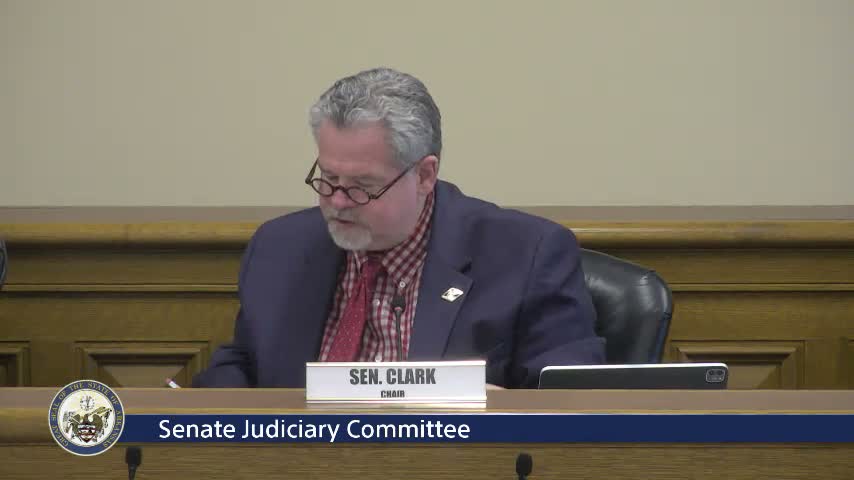
After the debate the chair reported the committee "has taken no action" on HB 1896; the transcript records the bill as failed to advance from committee that day.
What's next: Sponsors said they appreciated the scrutiny and may seek narrower language. Defense advocates urged more precise drafting to avoid unintended criminal exposure of intimate partners.