Get Full Government Meeting Transcripts, Videos, & Alerts Forever!
Get email alerts on the Juvenile Sentencing Parole topic
No spam. Unsubscribe anytime.
Senate committee rejects bill to extend parole consideration to people sentenced at 19–20
Summary
After hours of testimony from survivors, prosecutors, formerly incarcerated people and volunteers, the Senate Judiciary Committee voted down SB 591, a proposal to allow parole consideration for those sentenced at 19 or 20 under Act 539 (2017). Supporters cited neuroscience and rehabilitation; opponents cited trauma to victims and procedural concerns over retroactivity.
Little Rock — The Senate Judiciary Committee declined to advance Senate Bill 591 on Tuesday, rejecting a proposal that would have given people who were 19 or 20 when sentenced a chance to seek parole under the framework established by Act 539 of 2017.
Proponents framed the proposal as a narrow, science‑based expansion of the 2017 law. "Our brains just aren't really fully developed until we're about the age of 25," Sen. Greg Lelling said in opening remarks. Laura Berry, a formerly incarcerated person who said she was sentenced at 17 and released after Act 539, told the committee, "It was not an automatic reset button ... they have to show a growth and an accountability over the years for the board to give you the second chance to come home." Berry said parole consideration under the bill would require psychological evaluations and decades of demonstrated change before the parole board would consider release.
Speakers who had served lengthy sentences described education, mentorship and post‑release work as evidence that people can change. "I trained them without no assistance ... I get the other ones y'all let out on the other bill. They doing fabulous," former inmate Kip Brown said, arguing for supervised opportunities to return to society.
Opponents included Laurie Campuris, deputy prosecutor coordinator for the Arkansas Prosecuting Attorneys Association, who warned that the bill risks retraumatizing victim families. Campuris cited the post‑Miller resentencings that brought victims back to court: "The prosecuting attorneys ... have had to go through cases where those families have been brought back into court and resentencing has happened," she said, arguing the committee should not expand the age in criminal sentencing.
Committee members split during questioning over whether SB 591 would require resentencing in court or only parole hearings. Proponents and witnesses stressed the difference: SB 591 would create parole hearings for eligible people rather than automatic resentencing. "What we're talking about today is actually a chance for parole," a supporter said, adding parolees would be subject to lifetime supervision unless discharged.
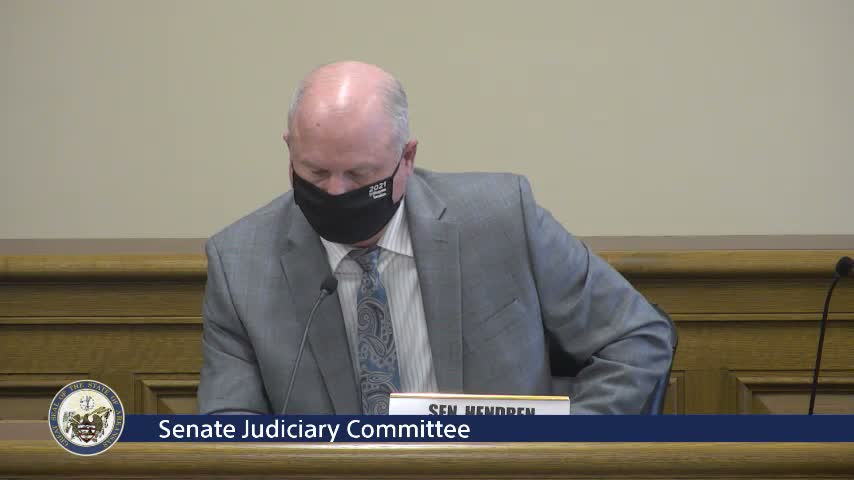
After more than two hours of testimony and questioning, Sen. Johnson moved to pass the bill and Sen. Hendren seconded. The committee took a voice vote; the motion did not carry.
The committee did not record a roll‑call tally in the transcript. The immediate practical effect is that SB 591 will not advance out of this committee to reach the Senate floor for further consideration.
What's next: Supporters and opponents described the issue as morally and legally complex. Proponents pledged to return with narrower language or additional safeguards; prosecutors said the courts should clarify retroactivity in ongoing litigation. No new committee action on SB 591 was recorded at the end of the session.