Get Full Government Meeting Transcripts, Videos, & Alerts Forever!
Get email alerts on the Criminal Justice topic
No spam. Unsubscribe anytime.
Committee approves bill to limit retrial after sentencing‑phase mistrial in capital cases
Summary
The committee voted to pass HB 17‑31, which clarifies that a mistrial in the sentencing phase of a capital murder trial need not undo a valid guilty verdict; prosecutors could ask the judge to impose life without parole or seek a new sentencing jury.
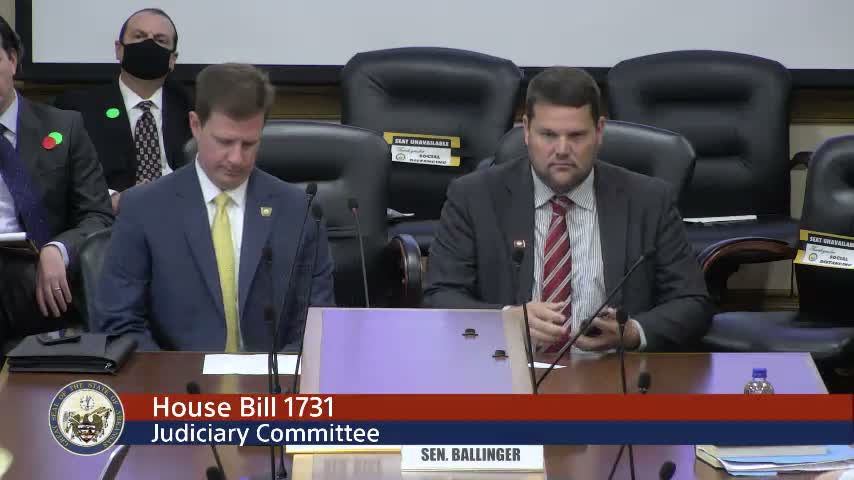
The Senate Judiciary Committee voted to pass House Bill 17‑31 after hearing from prosecutors and defense counsel about a procedural problem exposed in a recent Northwest Arkansas capital case.
Senator Bart Hester introduced the bill and yielded to Benton County Prosecuting Attorney Nathan Smith, who described the issue that prompted the measure: under Arkansas’s "same jury" provision, a mistrial in the sentencing phase had been interpreted to require retrial of the entire case, including the guilt phase. Smith told the committee that in State v. Mauricio Torres, a witness’s conduct during sentencing led the trial judge to declare a mistrial and, upon appeal, the state’s position was rejected, resulting in a retrial of a guilt verdict that had, Smith argued, no error.
"When a mistrial occurs in the sentencing phase, the options available are the same as if the Supreme Court had reversed the sentencing phase at a later date," Smith said. The bill clarifies that a guilty verdict need not be disturbed by a sentencing‑phase mistrial and provides that the prosecutor may either ask the judge to impose life without parole or empanel a new jury for sentencing in capital cases. Smith emphasized the change "takes no rights away from the defendant" and preserves full appellate rights.
Defense attorney Jeff Rosenzweig, who represented a defendant in the cited case, described the situation as "extremely rare" and said he would disagree with the prosecution's view that there was no error in the guilt phase, but he limited his remarks to informational comment.
Committee members asked practical questions about empaneling a new jury, venue and bond. Smith answered that empaneling a new jury for sentencing would be required in those instances and that venue and bond remain matters for judicial discretion.
The committee approved the bill on a voice vote; sponsors said the change is narrowly targeted to address the rare but "catastrophic" consequence of the prior interpretation.
Next steps: HB 17‑31 moves from committee as a do‑pass recommendation to the next stage of the legislative process.