Get Full Government Meeting Transcripts, Videos, & Alerts Forever!
Get email alerts on the Corrections Financial Restitution topic
No spam. Unsubscribe anytime.
Committee approves amendment to allow limited use of stimulus payments to satisfy inmates' court‑ordered obligations
Summary
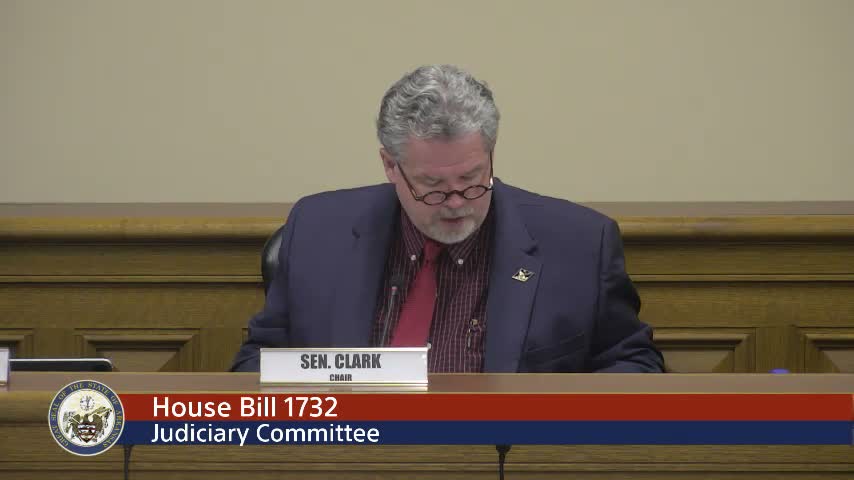
Legislators and DOC officials debated whether federal stimulus payments received by incarcerated individuals can be used to pay outstanding fines, fees or restitution. The committee adopted an amendment laying out a notification and enforcement framework and passed the measure with the aim of recovering monies owed to victims and the state.
Senator Rice and others introduced legislation and an amendment to authorize a process whereby federal relief or stimulus funds received by incarcerated individuals could be applied to outstanding court‑ordered financial obligations (fines, restitution, court costs) when an appropriate order or notification is in place.
Solomon Graves, identified as secretary of corrections, told the committee that IRS guidance and court decisions have evolved: while early guidance suggested stimulus payments to incarcerated people should be returned, subsequent court rulings changed that interpretation and the IRS has since altered guidance. DOC currently deposits confirmed stimulus payments into inmates' trust accounts unless a court order directs otherwise.
Committee members asked whether the Attorney General or courts could provide injunctive relief to divert funds at receipt; DOC counsel Christine Crier said absent a court order directing interception of federal funds, the department must deposit the monies and a federal court order would likely be necessary to change that practice. Senators discussed practical collection strategies and whether DOC planned active collection operations; Secretary Graves said DOC can place liens on accounts and remit funds when notified of obligations but does not have broad authority to seize federal funds without orders.
An amendment was adopted to clarify the process for notification and limited interception where authorized; the committee moved the bill as amended by voice vote.