Get Full Government Meeting Transcripts, Videos, & Alerts Forever!
Get email alerts on the Public Records topic
No spam. Unsubscribe anytime.
Witnesses, advocates warn proposed audiovisual FOIA fees could bar low‑income Arkansans and create operational burdens
Summary
The Senate Judiciary Committee concurred with a House amendment setting a $20 hourly cap for audiovisual FOIA charges after three hours, but public testimony raised concerns that the fee and a 30‑day retention window could deny low‑income and incarcerated people access to critical evidence and overwhelm county offices.
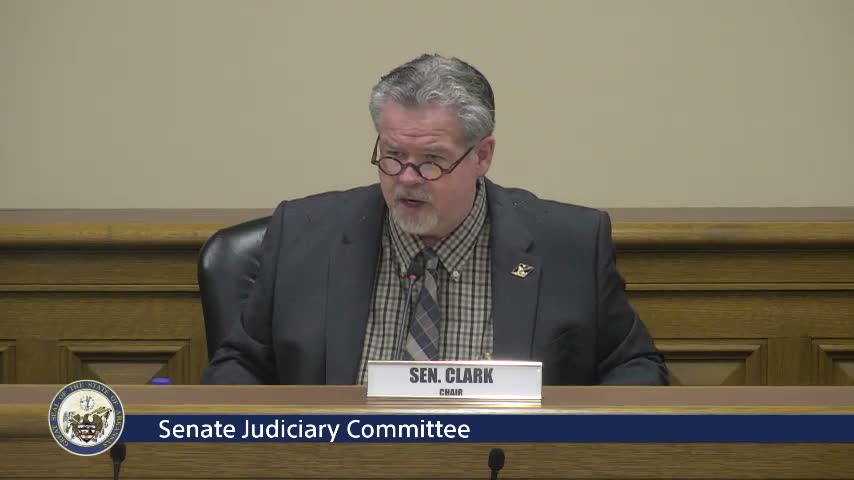
The Senate Judiciary Committee on Thursday concurred with a House amendment that narrows how counties may charge for audiovisual public‑records requests, but public testimony warned the change could have unintended consequences for everyday Arkansans.
Mark Whitmore, who identified himself as representing the Association of Arkansas Counties, and the amendment’s sponsor described the change as consumer‑protective: for requests requiring more than three hours of personnel time, counties would charge $20 per hour for the recorded time rather than pursuing higher labor‑based charges. "If their request is over 3 hours ... they simply state they'll charge $20 per hour of the recorded time," Whitmore said during the committee.
Sarah Moore, co‑founder of the Arkansas Justice Reform Coalition, asked the committee to reconsider elements of the audiovisual language. Moore argued the $20 hourly charge after three free hours is beyond the means of many Arkansans and said the 30‑day retention period for non‑criminal audiovisual records risks erasing evidence before a person can obtain counsel. "For many working families, $20 an hour is way above what they make per hour," Moore said. She added that the bill’s drafting, which pulled selective sentences from existing FOIA sections, may inadvertently allow people who are incarcerated to submit requests in a manner not intended under current law and could "inundate law enforcement" with frequent audiovisual requests.
Committee members pressed Moore on specifics. One senator noted public defenders are often appointed 30–60 days after arrest and asked whether the 30‑day audiovisual retention could leave an accused person without footage relevant to early contacts with police; Moore said that was a realistic concern in some counties. Supporters of the amendment described the three‑hour threshold as a guardrail against indefinite or extremely costly requests; proponents said most requests are under three hours and the amendment clarifies billing for long requests.
The committee did not amend the language on the floor; members discussed procedural options to pause the bill before the full Senate but did not pursue that course immediately. The committee’s concurrence vote was taken by voice.
What’s next: The amendment will travel with the bill to the Senate floor unless sponsors choose to pull it for redrafting. Advocates asked legislators to collect additional county cost data and to revisit retention and access language to avoid penalizing low‑income requesters and to ensure audiovisual records needed for criminal defense remain available while balancing administrative burdens on local governments.