Get Full Government Meeting Transcripts, Videos, & Alerts Forever!
Get email alerts on the Eviction Sealing Covid topic
No spam. Unsubscribe anytime.
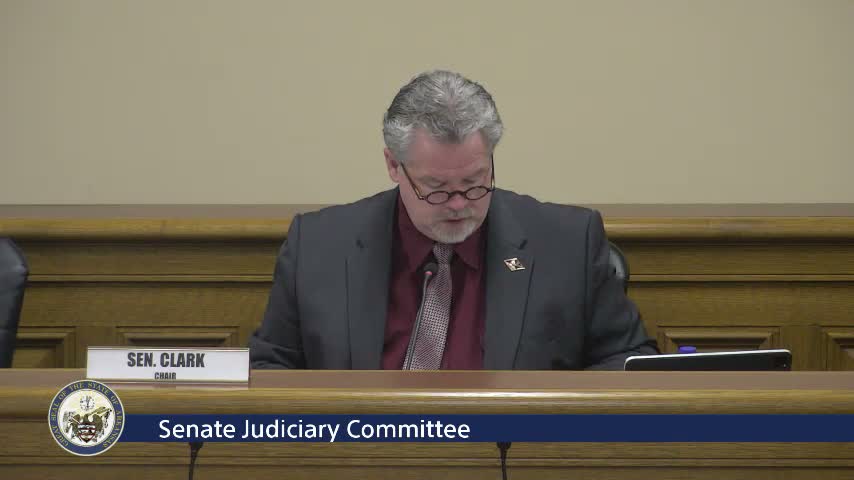
Sponsor pulls bill on sealing COVID‑era eviction records after extended committee questioning
Summary
Senate Bill 476 would have allowed courts to seal eviction records when a judge finds nonpayment resulted from pandemic‑related financial hardship; after extended debate about definitions, scope, judgments and landlord impacts the sponsor pulled the bill to revise its language.
Senator Tucker presented Senate Bill 476, a measure intended to allow tenants evicted for nonpayment caused by COVID‑19 financial hardship (evictions after March 1, 2020) to petition a court to have the eviction record sealed. Tucker described the proposal as narrow relief for tenants whose evictions were caused by pandemic‑related financial hardship so future landlords would not automatically reject them for a pandemic‑related eviction.
Committee members probed multiple policy and practical issues. Senator Ross and others asked whether sealing would affect judgments against tenants, liens, or the ability of landlords to collect unpaid amounts. Senator Ballinger raised constitutional and due‑process concerns and cautioned that language allowing broad sealing could lead to cases being overturned if evidence was later challenged. Senator Johnson and multiple members asked the sponsor to define key terms such as 'adversely affected/impacted' and whether the bill should limit the number of sealed evictions a person could receive.
Several members also asked about the bill's open‑ended time horizon (the text tied sealing to the pandemic window beginning March 1, 2020 but did not include a termination), the potential for misuse by repeat problem tenants, and whether a sealed court record would prevent landlords from disclosing eviction history outside court records. Senator Tucker acknowledged many of these concerns, offered to work with members on definitions and an amendment (for example, tying eligibility to emergency declarations or adding a time limit) and formally asked to pull the bill for revision. The chair granted the request without objection.
The bill was not voted on; the sponsor said he would refile the measure after addressing committee concerns.